When Ministry Leaders & Pastors Lose Touch With People!

Sometimes, ministry leaders and pastors need to get out of their theology books, challenge their ideological vantages, and better understand the world around them!

Much of the divisiveness in our society, culture, politics, and the church is because we are “ignorant” — ignorant about where others are coming from and how different our knowledge and experiences are from each other.

A six-part mini-series began last evening on NBC. As I watched the account, and then the additional hour of general commentary on the event, I was overcome with tears and deep sadness. One of many thoughts plagued my mind and heart . . . . Why was this account, (and sadly many others) never taught to us? After all my years of education from elementary, jr. high, high, B.A., M.A., Ph.D. — in the North — I was unaware of this horrific tragedy!

Link to this 1955 Video

Over the years, there has been a new interest in this story. That renewed interest may have begun with Steve Whitaker. Steve Whitaker was a Master’s student at Florida State University and a primary contributor to that renewed interest through his graduate thesis on Emmet Till in 1962. [2]

[Steve] Whitaker had grown up in Tallahatchie County, Mississippi, and knew many of the principals in the case. Whitaker, often under the cover of darkness, would drive his recognizable Volkswagen around the state, interviewing jurors, lawyers, witnesses, and former law enforcement officials.

Occasionally he would return to find threatening notes left on his windshield.

Also under the cover of darkness would Whitaker slip across town in

Tallahassee to the library at Florida A&M University (FAMU). As a white student in the Jim Crow South, Whitaker was not legally allowed on FAMU’s campus. But with the help of a sympathetic librarian, Whitaker would slip in through a back door and sequester himself with the library’s collection of black newspapers. On one memorable night of racial violence in the city,

Whitaker needed a personal escort from the football team just to get off campus alive.

Whitaker defended his 206-page thesis in 1963, and there it sat in the bowels of FSU’s Strozier Library for years. These days it is online and widely heralded as the most important document ever written on the Till case—though still not published, at least until now. In a case woefully in need of primary sources, Whitaker had either found them or talked to them. With a bit of persuasive “lubrication” from Jack Daniels, he talked with all the lawyers. He talked to the sheriffs, the jurors, and the undertakers. His friends and family knew Roy Bryant and J. W. Milam. He got his hands on the trial transcript as well as on the grand jury hearing. Sheriff Strider gave him all of the mail he had received related to the case. William Bradford Huie shared his notes and stories about the interviews regarding the awful confession that ran in Look magazine.” [1]

√  Then in 1988, Stephen J. Whitfield’s book, A Death in the Delta, again sought to bring attention to this tragic and unaddressed injustice.

√  In 2003, the PBS documentary,The Murder of Emmett Till, aired.

√  In 2005, A Wreath for Emmett Till, an extensive poem, was written by Marilyn Nelson.

√  An FBI “cold case” investigation began in 2006, with no meaningful outcome or prosecution of any involved.

√  In 2007, The murder of Emmett Till, by David Aretha, was published — pgs 138-139.

√  In 2010,The Murder of Emmett Till, by David Robson was written.

√  The federal investigation into the murder of Emmett Till ended December 6, 2021.

√  Mamie till-Mobley died in 2003.

“Mamie Till-Mobley, who died in 2003 just as she a i pleted this memoir, has honored us with her full testimony; I focused on my son while I considered this book…. The result is in your hands…. I am experienced, but not cynical, . . . I am hopeful that we all can be better than we are. I’ve been broken hearted, but I still maintain an oversized capacity for love.’ ” [3]

“We cannot afford the luxury of self-pity. Our top priority now is to get on with the building process. My personal peace has come through helping boys and girls reach beyond the ordinary and strive for the extraordinary. We must teach our children to weather the hurricanes of life, pick up the pieces, and rebuild. We must impress upon our children that even when troubles rise to seven-point- one on life’s Richter scale, they must be anchored so deeply that, though they sway, they will not topple.”
— Mamie Till-Mobley November 5, 1989″ — [3] pg viiii

√  Yesterday, January 6, 2022, ABC Series Premiere – Women of the Movement aired.

“His name is Emmett Till. I want people to know that he is a good boy,” says Tony Award winner Adrienne Warren as Mamie Till-Mobley in the first look at Women of the MovementThe ABC limited series is based on the real-life murder of Emmett Till and its effect on the Civil Rights Movement.

Note: “Cinema” carries a tremendous ability to do a lot of heavy lifting, for bad, but also for good. This is one of those “good” examples.  Take the time to watch part 1, and next week, part 2.


Other Details & Links:

1. https://baltimorecitycollege.libguides.com/ld.php?content_id=25819408

2. Steve Whitaker’s Graduate Thesis — download pdf

3. Flyleaf of the cover: “Death of innocence : the story of the hate crime that changed America.”

https://www.washingtontimes.com/news/2021/dec/12/details-of-emmett-till-killing-still-a-mystery-as-/?utm_source=GOOGLE&utm_medium=cpc&utm_id=chacka&utm_campaign=TWT+-+DSA&gclid=EAIaIQobChMI-4Sku9af9QIVFKSzCh1VfQrhEAAYASAAEgKrPfD_BwE

https://en.wikipedia.org/wiki/Emmett_Till

https://en.wikipedia.org/wiki/Emmett_Till#/media/File:Glendora_Gin_sign.jpg

https://www.loc.gov/collections/civil-rights-history-project/articles-and-essays/murder-of-emmett-till/

https://www.nbcnews.com/news/nbcblk/justice-department-closes-inquiry-murder-emmett-finds-no-proof-accuser-rcna7806

https://www.nbcnews.com/video/death-of-emmett-till-revisited-history-of-the-1955-murder-1194367043799

https://thebiblechapterbychapter.files.wordpress.com/2022/01/stev-whitaker-emmett-till-etd-05272004-140932_flatten.pdf

A Lot of Bad Advice In A Complex, Fallen World

Over the years, a lot of bad-to-terrible counsel has been given by ministries and pastors concerning mental illness, the use of medications, and marriage.  The real world of life and living is far more complex that many counselors and pastors are open to understanding when they speak and respond as theological ideologues.

Perhaps, accounts like this will help move some to be more biblically grounded in reality and develop a heart for those who are in a real struggle with the effects of sin.  The fall has not only affected our relationship with God (spiritually), but it has damaged us socially, psychologically, emotionally, morally, and intellectually.

On Saturday, best-selling Christian author Lysa TerKeurst announced that she and her husband, Art, will be divorcing after nearly three decades of marriage.

TerKeurst, Proverbs 31 Ministries founder and author of several New York Times bestselling books, including It’s Not Supposed to Be This Way and Forgiving What You Can’t Forget, initially intended to divorce Art in 2017 over infidelity and struggles with addiction.

According to The Christian Post, the couple renewed their vows the following year to restore their marriage. However, in her recent post, TerKeurst lamented that her husband “has broken their vows.”

“Over the past several years, I have fought really hard to not just save my marriage, but to survive the devastation of what consistent deception of one spouse does to the other,” she wrote. “It’s brutal and heart crushing to constantly fear the hurtful choices of someone you love. I’ve had to learn the hard way there’s a big difference between mistakes (which we all make) and chosen patterns of behavior that dishonor God and the biblical covenant of marriage.”

As a result, TerKeurst now believes that “the wisest (and hardest) choice I can make is to stop fighting to save my marriage of 29 years and, instead, accept reality.”

“I don’t like this reality, but the truth is, relationship restoration doesn’t always work. I’ve cried and grieved over this and waited years, hoping this wouldn’t be our story. But even when restoration doesn’t work, forgiveness always does,” she asserted.

TerKeurst, a mother of 5 and grandmother of 3, also expressed gratitude to God for the “healing redemption” in her heart through “the power of forgiveness.”

“Bitterness and resentment could be eating me alive. But, miraculously, that’s not where I’m at. With time, prayer, and lots of counseling, my heart is healing,” she continued.

“Sometimes the culmination of all our efforts and the answer to our prayers is that God restores us in relationships,” TerKeurst wrote in closing. “And sometimes He rescues us out of relationships. I don’t understand why circumstances sometimes go the way my story is now going. But I’m standing firm in my faith and trusting God with every step. My family and I treasure your prayers and your compassion.”
[emphasis mine]


https://www.christianheadlines.com/contributors/milton-quintanilla/brutal-and-heartcrushing-christian-author-lysa-terkeurst-annonces-divorce-from-husband-of-29-years.html?utm_source=Pushnami

A LOT Has Changed In Today’s Church Life!

One of our younger extended family members visited over the holidays.  He holds an administrative position at one of the major Christian colleges. As we talked, I began identifying some of the changes in my generation.

A day later, and upon further thought,  I am taken back by the number of changes.

What has changed in the past number of years . . . .

  • church names,
  • an acceptance of a wide variety of prophetic views,
  • pastoral dress,
  • church music,
  • fewer issues of personal separation,
  • greater political involvement,
  • the decreased number of church services,
  • a move to more nationals as missionaries,
  • more pastors coming into ministry later and from a non-biblical educational beginning,
  • basic and shorter doctrinal statements,
  • more mega-churches,
  • a move away from “Sunday School” to small groups
  • fewer individuals who can lead congregational singing,
  • more “elder-lead” church polities,
  • churches that are more Calvinistic & New Calvinism,
  • a wider acceptance and use of different translations,
  • shorter sermons,
  • “church models” replacing denominations,
  • “movies” used as and in illustrations,
  • fewer all church choirs,
  • non-church wedding locations,
  • less use of organ and/or piano as the primary musical support,
  • diminished attention to the Old Testament,
  • more acceptance of the writings of past neo-orthodox / liberal “theologians,”
  • less commitment to the creation account — a “young earth,”
  • a greater “ecumenical.” attitude,
  • the use of video and video clips,
  • a greater acceptance of alcohol and dance,
  • only one service on Sunday,
  • carrying an actual Bible to church,
  • a political blurring of lines with Christian truths & principles
  • projected songs with no musical scores / no hymn books,
  • etc.

“Good-Bad-Or-Inbetween,” — these changes are part of today’s Christian landscape.

Some are surely good, but I would suggest that most have been to the church’s detriment. They have not strengthened a ministry or local church, but weakened its effectiveness, outreach, and/or growth.

The question still remains to be answered . . . .

“Nevertheless when the Son of man cometh, shall he find faith on the earth?”

“Flag It, Wave It, Acknowledge It”

Daniel Kleven has posted his concluding article on Edwards, Dabney, the role and place of the Reformed movement, and John Piper’s over the past years.  Thank You, Daniel Kleven, for writing this series of articles, and even more for your insights, courage, work, and writing which began in 2017-2018. It was that work that led to this day of Flag Waving.

The title of Kleven’s post included the words . . . .

“Flag It, Wave It, Acknowledge It”

Let me “Flag, Wave, and Acknowledge” two points that surely must be made!

♦♦♦♦♦

The Whitewashing Of Heroes Continues In The Reformed Movement

As Kleven states . . . .

Is there still hope for that “single river” to materialize this side of eternity? As things stand, white Reformed evangelicalism has shown little interest in changing . . . . That single river might still happen, though probably not from “the mountain stream of Reformed theology,” but from elsewhere.

John Piper’s unwillingness to meaningfully address the blatant racism of Dabney and/or Murray, and Piper’s present-day unwillingness to disavow men like Doug Wilson is also being whitewashed by today’s hero worshippers — because the hero of may is now Piper himself.

Yes, Kleven is likely correct about where theological change will come from — probably not from Reformed theology!  Too many Christian leaders and pastors are unwilling to disavow John Piper.

While many literally tossed the books of Ravi Zacharias into the garbage, such is not even a distant consideration for most Piper devotees/hero worshippers. Actually, that is what it might take for John Piper to be the first and foremost advocate for a meaningful course change.

Note: Before you conclude that the horrific behaviors of RZ are not to be compared to racism, read the words of Dabney, Murray, Wilson, and then read about slavery! —  i.e. “How The Word Is Passed.” [2]

Many questions troubled minds and hearts following the RZIM revelations . . .

  • How does a man like Ravi Zacharias preach, teach, write, and defend the Scriptures while engaged in horrific sexual misconduct?
  • Have the Scriptural truths and principles taught by him been warped and twisted to allow for such behavior?
  • How have those Scriptural truths and principles taught by him been compromised to allow for such a contradiction?
  • Why did it take so long to address — not to see — what was taking place?
  • How does loyalty trump integrity when it comes to Scripture?
  • How do men justify such contradictions?
  • What truths and principles have not been / are not being taught that would have countered such ungodly attitudes and actions?

The same questions must be considered regarding John Piper!

Something is terribly broken when a leader, teacher, and mentor cannot call out racism for all that it is, historically or presently.

Something is terribly broken when Christian leaders and pastors cannot disavow John Piper and his tolerance and promotion of Louis Dabney, Ian Murray, and Doug Wilson.

“No one is helped by whitewashing our heroes!” [1]

♦♦♦♦♦

The Same Thread May Account For Abusive Pastoral Leadership

Kleven cites Geroge Marsden . . .

“Perhaps the greatest fault of American Reformed communities since Puritan times is the that they have cultivated an elitism. Ironically, the doctrine of election has been unwittingly construed as meaning that Reformed people have been endowed with superior theological, spiritual, or moral merit by God himself… The great irony is that … the doctrine of grace ought to cultivate humility as a conspicuous trait of Reformed spirituality… Yet too often Reformed people have been so totally confident of their own spiritual insights that they have been unable to accept or work with fellow Reformed Christians whose emphases may vary slightly.” [emphasis mine]

I would suggest that the same elitism fuels the use, abuse, and misuse of God’s people in ministries and local churches.


1. Daniel Kleven quotes John Piper . . . .

Piper responded with this:

“The first thing I would say is that no one is helped by whitewashing our heroes, your heroes. No one has been helped by it… you don’t benefit by whitewashing your heroes. You won’t ever ask yourself the hardest questions about life if the people you love are whitewashed and you don’t ever come to terms with their sinfulness.”

Then Piper said this, and referenced Dabney specifically:

“And another thought comes to my mind, namely, that if you see in Edwards, Luther, Dabney, if you see sin, you should flag it, wave it, acknowledge it.

2. “How the Word Is Passed,” by Clint Smith

♦♦♦♦♦ ♦♦♦♦♦ ♦♦♦♦♦ ♦♦♦♦♦

A few paragraphs from Kleven’s article worth citing . . .

It’s interesting to me that over the years, on some issues, Piper has been willing to name names and battle publicly for a position. When the Sovereignty of God was at stake, Piper publicly disputed with Greg Boyd and advocated for his removal from Bethel Seminary. Over the doctrine of hell, Piper famously said “Farewell, Rob Bell.” But he has not been willing to do this over racism. Piper has never been willing to publicly critique Douglas Wilson, and my article is the only time Desiring God has done this with Robert Lewis Dabney.

Regardless, in 2018 there was no caveat in Piper’s recommendation of Murray’s biographies, not even of Dabney. And, consistent with the list of “Books that Desiring God Recommends,” there is not a single link to a biography of a Black Christian

But when I also consider the decades long span of his work, for most of those years he repeatedly commended a white-supremacist like Robert Lewis Dabney to thousands of pastors, church leaders, and readers. When I consider the question “how and why was Robert Lewis Dabney commended to a generation of reformed evangelicals?” John Piper has played a significant role.

Is there still hope for that “single river” to materialize this side of eternity? A things stand, white Reformed evangelicalism has shown little interest in changing . . . . That single river might still happen, though probably not from “the mountain stream of Reformed theology,” but from elsewhere.

“How did we get here? How did a white-supremacist become one of our theological heroes in the first place? How and why did that happen?”

Edwards, Dabney, Piper, WILSON, & The Reformed Community!

Again, let me suggest reading the series of articles by Daniel Kleven on how we got where we are regarding the reformed movement and specifically John Piper’s contribution to the present state of affairs.

Let me make a few personal observations to Kleven’s incisive examination without reprinting his many poignant and heart-rending analyses.


#1) “If you lie down with dogs, don’t be surprised if you get up with fleas.”

Or as Proverbs warns . . . .

He that walketh with wise men shall be wise: but a companion of fools shall be destroyed.

Make no friendship with an angry man; and with a furious man thou shalt not go: Lest thou learn his ways, and get a snare to thy soul.

As Kleven states . . . . 

In his book Black & Tan, Wilson quotes Dabney more than any other figure, and repackages Dabney’s Lost Cause [1] propaganda for slavery and the Confederacy for his contemporary audience. Douglas Wilson, the self-proclaimed “paleo-confederate,” has promoted Robert Lewis Dabney, the actual Confederate, more extensively than anyone else in modern memory. . . . Rather than addressing the “poison” of “racist slavery,” Piper allowed its most prominent contemporary apologist his largest platform at conferences and on the Desiring God website.

John Piper will not be the first, nor the last, to materially damage his ministry by an unwillingness to speak out clearly and forcefully. Predictably, Doug Wilson’s fleas have already infested Piper’s legacy to where Piper’s reluctance (to date) may not even overcome a subsequent disavowal of Wilson.


#2) When Relationships Trump Integrity, Truth Is Slain In The Streets

When relationships TRUMP integrity, the truth, and the willingness to speak truth to power are butchered (my, that word calls up yet other contemporary examples of the same principle — referred to later).

You will see that in other ministries, and in the local church. One only needs to review the evangelical examples of the past year or more and shudder at the reality of it.

Piper’s unwillingness to disavow Doug Wilson may be the most telling indicator of why the reformed community has lost its way and influence when it comes to addressing racism!

“So, did this recommended book list move forward the dream of “a single river” articulated just four years earlier? Well, out of those 354 books, there were two written by African American Christians, a whole 0.5% of the list. Both books were relegated to the “racial reconciliation” category, one merely as a co-author. For comparison, a number of white men (D. A. Carson, Wayne Grudem, Iain Murray, R. C. Sproul) are recommended on the list multiple times in a variety of categories. Next to John Piper himself (12x), the most recommended author on the list is Douglas Wilson (9x). Let that sink inDouglas Wilson alone is recommended more than 4x as many times as all of the African American authors combined. Also featured in the list? Southern Presbyterian white-supremacists Robert Lewis Dabney and Benjamin Morgan Palmer.” [2]

“Allegiance” to men, who not only hold but expouse repugnant positions and who permit and/or engage in abusive actions, is not only obvious in the world of politics, but within ministries and churches.

Not only does John Piper refuse to call out men like Wilson (no less promoting Wilson), but pastors and leaders across the reformed movement also reveal that they too are reluctant (at best) to challenge and even disavow their allegiance to men like Piper.

Well-known Bible scholars, such as Kevin Bauder, back off of addressing serious issues involving John Piper & BBC. He claims that BBC is an autonomous local church, and as such, he has no interest in speaking to the serious issues which have arisen.  Men like Dough Wilson and John Piper are counting on that response!


#3) “Intent” Is Not A Tolerated Excuse When The Repeated Outcome Is Unchanged.

How often is it said, “I never intended that / for / it to be / there to be /etc. . . . ” I understand that “intent” matters, but it is not a defense when the repeated and damaging outcome is unchanged.

“I didn’t intend to hit, injury, or kill the child who ran out between the parked cars.” I would suggest that no matter how genuine the lack of intent, the child is still injured or worse. That reality should change the driving habits of the most genuine. There should be an obvious and sincere response to avoid such outcomes down the road.

“Reckless” driving is no such indicator.  

Greater care and caution are!

As Kleven states . . . . 

“Whether or not we intended it, here’s the message that I’m afraid minorities heard: ‘come to the table for hard work on racial reconciliation; then, when extremely racially insensitive statements are made with no (or vague and heavily qualified) apologies, we’re going to call it “a great dialogue” and chastise you for being too thin-skinned.’ Minorities have gotten the message, and they’ve left the table.”


Those in positions of influence and notoriety, such as Piper, have an obligation because their voice (or lack of voice) carries immense weight. [3]

Isn’t it about time to call out men who have exerted such wide and deep influences in the evangelical and reformed culture, such as John Piper. His unwillingness to disavow men like Doug Wilson speak clearly and loudly. That alone should be enough testimony and sufficient reason to disavow men such as Piper, as well as those who let relationships and allegiance trump integrity!  

Does the evangelical and reformed community really need to loiter about the decision, or is this just another example of the same quietness regarding this past weekend at First Baptist, Dallas, Texas?


THANK YOU
DANIEL KLEVEN!


1.  “Lost Cause” link — https://www.battlefields.org/learn/articles/lost-cause-definition-and-origins

“There are six main parts of the Lost Cause myth, the first and most important of which is that secession had little or nothing to do with the institution of slavery. Southern states seceded to protect their rights, their homes, and to throw off the shackles of a tyrannical government.

Second, slavery was portrayed as a positive good; submissive, happy, and faithful slaves were better off in the system of chattel slavery which offered them protection.

The third tenet states that the Confederacy was only defeated because of the Northern states’ numerical advantage in both men and resources.

Fourth, Confederate soldiers are portrayed as heroic, gallant, and saintly. Even after the surrender, they retained their honor.

Fifth, Robert E. Lee emerged as the . . . revered the Virginian as the ultimate Christian soldier who took up arms for his state.

Finally, Southern women also steadfastly supported the cause, sacrificing their men, time, and resources more than their Northern counterparts. The idealized image of a pure, saintly, white Southern woman emerged as well.”

2. — https://biblioskolex.wordpress.com/2021/12/23/whose-calvinism-which-community-john-piper-desiring-god-and-robert-lewis-dabney-part-8/

3. One could easily cite the example of Elon Musk, who spoke out yesterday. The importance and strength of his voice were well understood across the business and political world!


Today’s Illustration: The Best Christmas Gift Of My Life

[Including Links To The Author’s Original Story]

by Matt Miles . . . . .

It was ChristmasEve 1942.I was fifteen years old and feeling like the world had caved in on me becausethere just hadn’t beenenoughmoneyto buymethe rifle that I’d wanted for Christmas.

We did the chores early that night for some reason. I just figured Daddy wanted a little extra time so wecouldreadintheBible.AftersupperwasoverItookmybootsoffandstretchedoutinfrontof the fireplace and waited for Daddy to get down the old Bible.

I was still feeling sorry for myself and, to be honest, I wasn’t in much of a mood to read Scriptures. But Daddy didn’t get the Bible instead he bundled up again and went outside. I couldn’t figure it out becausewehadalreadydoneallthechores.Ididn’tworry aboutitlongthoughIwastoobusy wallowing in self-pity.

Soon he came back in. It was a cold clear night out and there was ice in his beard. “Come on, Matt,” hesaid.”Bundle upgood,it’s cold outtonight.”I was really upsetthen.Notonly wasn’t I gettingthe rifle forChristmas,nowhewasdraggingmeoutinthecold,andfornoearthly reasonthatIcould see.We’d alreadydoneallthechores,andIcouldn’tthinkofanythingelsethatneededdoing, especially not on a night like this. But I knew he was not very patient at one draggingone’s feet whenhe’d toldthemtodosomething,soI gotupandputmybootsbackonandgotmycoat. Mommy gave me a mysterious smile as I opened the door to leave the house. Something was up, but I didn’t know what.

Outside, I became even more dismayed. There in front of the house was the work team, already hitchedtothebigsled.Whatever itwasweweregoingtodowasn’tgoingtobeashort,quick,little job. I could tell. We never hitched up this sled unless we were going to haul a big load. Daddy was already up on the seat, reins in hand. I reluctantly climbed up beside him. The cold was already biting at me. I wasn’t happy. When I was on, Daddy pulled the sled around the house and stopped in front of the woodshed.He gotoff and I followed.

“I think we’ll put on the high sideboards,” he said. “Here, help me.” The high sideboards! It had been a bigger job than I wanted to do with just the low sideboards on, but whatever it was we were going to do would be a lot bigger with the high side boards on.

Then Daddy went into the woodshed and came out with an armload of wood -the wood I’d spent all summerhaulingdownfromthemountain,andthenallFall sawingintoblocksandsplitting.What washedoing?Finally Isaidsomething.Iasked,”What areyoudoing?””YoubeenbytheWidow Jensen’slately?” heasked.Mrs.Jensenlivedabouttwomilesdowntheroad.Herhusbandhaddied a year or so before and left her with three children, the oldest being eight. Sure, I’d been by, but so what?

Yeah,”I said,”Why?”

“I rode by just today,” he said. “Little Jakey was out diggingaround in the woodpile trying to find a few chips. They’re out of wood, Matt.” That was all he said and then he turned and went back into the woodshed for another armload of wood. I followed him. We loaded the sled so high that I began to wonder if the horses would be able to pull it. Finally, he called a halt to our loading then we went to the smoke house and he took down a big ham and a side of bacon. He handed them to me and told me to put them in the sled and wait. When he returned he was carrying a sack of flour over his right shoulder and a smaller sack of something in his left hand.

“What’s in thelittle sack?” I asked.Shoes,they’re outofshoes.Little Jakey justhadgunnysacks wrapped around his feet when he was out in the woodpile this morning. I got the children a little candy too. It just wouldn’t be Christmas without a little candy.”

We rode the two miles to Mrs. Jensen’s pretty much in silence. I tried to think through what Daddy was doing. We didn’t have much by worldly standards. Of course, we did have a big woodpile, thoughmostofwhatwasleftnowwasstillintheformoflogsthatIwouldhavetosawintoblocks and split before we could use it. We also had meat and flour, so we could spare that, but I knew we didn’t have any money, so why was he buying them shoes and candy? Really, why was he doing any ofthis?Widow Jensenhadcloserneighborsthanus;itshouldn’thavebeenourconcern.

We came in from the blind side of the Jensen house and unloaded the wood as quietly as possible then we took the meat and flour and shoes to the door. We knocked. The door opened a crack and a timidvoicesaid,”Who isit?” “LucasMiles,Ma’am,andmyson,Matt,couldwecomeinforabit?” Mrs. Jensen opened the door and let us in. She had a blanket wrapped around her shoulders. The children were wrapped in another and were sitting in front of the fireplace by a very small fire that hardly gave off any heat at all. Mrs. Jensen fumbled with a match and finally lit the lamp.

“We broughtyouafewthings,Ma’am,”Daddysaidandsetdownthesackofflour.Iputthemeaton thetable.Thenhehandedherthesackthathadtheshoesinit.Sheopenedithesitantly andtookthe shoes out one pair at a time. There was a pair for her and one for each of the children -sturdy shoes, the best, shoes that would last. I watched her carefully. She bit her lower lip to keep it from trembling and then tears filled her eyes and started running down her cheeks. She looked up at my Daddy like she wanted to say something,but it wouldn’t come out.

“We broughtaloadofwoodtoo,Ma’am,”hesaid.Thenturnedtomeandsaid,”Matt,gobringin enoughtolastawhile.Let’s getthatfireuptosizeandheatthisplaceup.”Iwasn’t thesameperson whenIwentbackouttobringinthewood.IhadabiglumpinmythroatandasmuchasIhateto admit it, there were tears in my eyes too. In my mind I kept seeing those three kids huddled around the fireplace and their mother standing there with tears running down her cheeks with so much gratitude in her heart that she couldn’t speak.

My heart swelled within me and a joy that I’d never known before filled my soul. I had given at Christmas many times before, but never when it had made so much difference. I could see we were literally savingthelivesofthesepeople.

I soon had the fire blazing and everyone’s spirits soared. The kids started giggling when Daddy handed them each a piece of candy and Mrs. Jensen looked on with a smile that probably hadn’t crossed her face for a long time. She finally turned to us. “God bless you,” she said. “I know the Lord has sent you. The children and I have been praying that he would send one of his angels to spare us.”

In spite of myself, the lump returned to my throat and the tears welled up in my eyes again. I’d neverthoughtofmyDaddyinthoseexacttermsbefore,butafterWidow JensenmentioneditI could see that it was probably true. I was sure that a better man than Daddy had never walked the earth. I started remembering all the times he had gone out of his way for Mommy and me, and many others. The list seemed endless as I thought on it.

Daddy insisted that everyone try on the shoesbefore we left. I was amazedwhen they all fit and I wondered how he had known what sizes to get.Then I guessedthat if he was on an errand for the Lord that the Lord would make sure he got the right sizes.

TearswererunningdownWidow Jensen’sfaceagainwhenwestooduptoleave.MyDaddytook each of the kids in his big arms and gave them a hug.They clung to him and didn’t want us to go.I could see that they missed their Daddy and I was glad that I still had mine.

At the door he turned to Widow Jensen and said, “The Mrs. wanted me to invite you and the childrenoverforChristmasdinnertomorrow.Theturkeywill bemorethanthethreeofuscaneat,

andamancangetcantankerousifhehastoeatturkeyfortoomanymeals.We’ll bebytogetyou abouteleven.It’ll benicetohavesomelittle onesaroundagain.Matt,here,hasn’tbeenlittle for quite a spell.” I was the youngest.My two brothers and two sisters had all married and had moved away.

Mrs.Jensennoddedandsaid,”Thankyou,Brother Miles.Idon’thavetosay,MaytheLordblessyou. I know for certain that He will.”

Out on the sled I felt a warmth that came from deep within and I didn’t even notice the cold. When we had gonea ways, Daddy turned to me and said, “Matt, I want you to know something.Your Mother and me have been tucking a little money away here and there all year so we could buy that rifle for you, but we didn’t have quite enough.

Then yesterday a man who owed me a little money from years back came by to make things square. Your Mom and me were real excited, thinking that now we could get you that rifle, and I started into town this morning to do just that, but on the way I saw little Jakey out scratching in the woodpile with his feet wrapped in those gunny sacks and I knew what I had to do. Son, I spent the money for shoes and a little candy for those children. I hope you understand.”

I understood, and my eyes became wet with tears again. I understood very well, and I was so glad Daddyhaddoneit.Nowtherifle seemedvery lowonmylistofpriorities. Hehadgivenmealot more. He had given me the look on Mrs. Jensen’s face and the radiant smiles of her three children. For the rest of my life, whenever I saw any of the Jensens or split a block of wood, I remembered, and remembering brought back that same joy I felt riding home beside of my daddy that night. He had given me much more than a rifle that night -he had given me the best Christmas of my life.

PDF Copy

https://inthemastersshadow.wordpress.com/2018/10/24/a-great-christmas-story-by-matt-miles/https://www.theideadoor.com/other-pages/stories-poems-quotes/christmas-themed-stories/the-best-christmas-of-my-life/https://hvacinsider.com/christmas-eve-1942/
Christmas Eve 1942


Jonathan Edwards, Dabney, Piper & Daniel Kleven

One of the most insightful analyses of the connection between Slave Ownership & Reformed theology is being written “daily” by Daniel Kleven!

If you haven’t read his series of articles on the subject, you should take the time to read the sobering and honest unwrapping of this subject. [1]

Here is one recent example of his perceptive ability to unravel what has happened in regards to reformed theology and slave ownership. . . . .

[Sherard Burns states]“the eradication of racism today, as would be the case with slavery then, will not come about through programs, but by means of a God-centered and God-entranced view of reality… Whatever we may think of Edwards, one thing is for certain: He left the American church with the necessary theological truths to kill racism in our hearts and to be conquerors of it in the church.”

Burns, “Trusting,” 170–71.

Again, I must demur. The “eradication of slavery” did not come through Edwards’s “God-entranced view of reality” — it only finally came as a result of a bloody Civil War. As much as we may wish that “good theology” is all it takes to change the world, we must face the actual historical record: Edwards did not leave the church with the necessary theological truths to end slavery and kill racism, and the evidence is seen a thousandfold on the pages of actual history, in the lives of 18th century Reformed slaveholders, 19th century Reformed white-supremacists, 20th century Reformed segregationists, and their 21st century Reformed admirers. To pretend otherwise is wishful thinking.

Without restating the many insightful observations of Kleven, let me move to make three points that I was left with after reading his articles — to date.

#1) An orthodox theology is unable to root out unbiblical and/or ungodly attitudes or actions.

While it may be true that you will never have an accurate and sound world-view with a defective theology, an orthodox theology does not have any ability to assure the opposite.

In fact, you can have a defective theology and still be more socially in harmony with biblical truths, attitudes, and actions than those who are orthodox.  

Something is terribly broken when Quakers, or men who embrace “liberation theology,” are more in tune with the wickedness of slavery than those who claim to be theologically and biblically orthodox!


#2) The ability of regenerate men to justify wrong-doing is both actual and frightening.

The ability of humanity, even though saved by God’s grace, to justify wrong — to make wrong, right and right, wrong — is glaring. That was not just true for Edwards, Dabney, or Piper; it is evident in ministries and local churches today — RZIM.

And the failure of leadership in ministry, to be the corrective actor it could and should be, is just as real. The proof is evident throughout Christian ministries and local churches! [2]  Those who are in a position to change, correct, and challenge leadership failure remain all too quiet and equally become part of the continuing problem!  

Though often too late, thankfully, some come to realize that and see their participation for what it was — [Link to Ruth Malhotra’s CT article — a great read!].

#3) A ministry that had the potential of correcting the trajectory of racism can become a super-spreader of the same historical failure.

John Piper is not merely the pastor of an autonomous baptist church in Minnesota. His ministry — through books, seminars, conferences, speaking engagements, blogs, posts, tweets, and his college and seminary program — has been vast and lengthy!

Piper has utterly failed to grab the opportunity to truly change the direction, tone, and biblical understanding of racism within Bible ministries across America — and beyond! He has instead been unwilling to call out the tragic and hateful errors of men like Edwards and Dabney as he well should have! In fact, he has instead embraced men like Doug Wilson — to this day!

Like has often been said — “When you read the same books, you think the same thoughts!” Many have read the book of Edwards, Dabney, and John Piper for decades!  

As Kleven states . . . . 

“Our criteria for “giant of the Christian faith” is ethically anemic; it elevates intellect, and ignores the obedience of love and justice. We elevate “heroes” based on their “theology,” and then find ourselves in a conundrum: “Now what do we do with their glaring inconsistencies?” Maybe we need to go all the way back to square one, and re-evaluate what makes a “giant,” and only hold those in esteem who are actually worthy of imitation, not just those who intellectually stimulate us through their books.”


1. https://biblioskolex.wordpress.com/2021/12/21/trusting-the-theology-of-a-slave-owner-john-piper-desiring-god-and-robert-lewis-dabney-part-6/

2. https://www.christianitytoday.com/ct/2021/december-web-only/christmas-restoration-ruth-malhotra-rzim-lori-anne-thompson.html

The #1 Reason “Fair Criticism” Fails

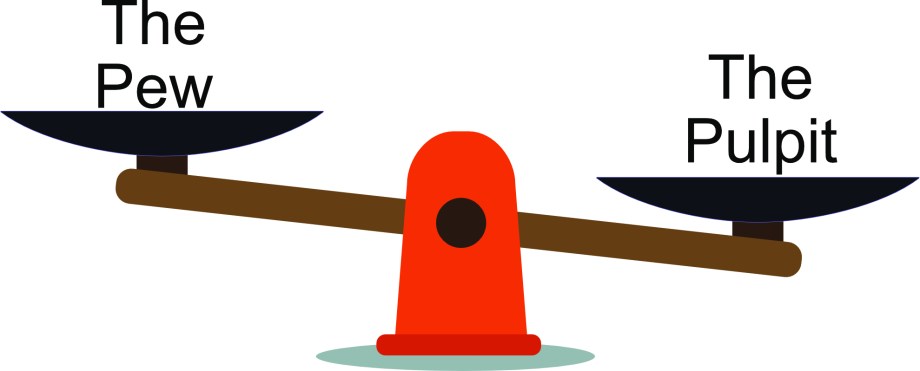
It is not unusual for ministry leaders and pastors to tilt the scales when it comes to criticism.  Anyone involved in ministry or leading a ministry well understands that!

Simply using the word “criticism” or “discord” is a subtle argument against whatever is being called out. The “argument” that one is “sowing discord” or upsetting the “unity of the church” is almost sufficient to discredit any critics and/or quiet any further discussion of this-or-that decision or action.

There are some biblical truths that are typically called up defensively. Indeed, those truths are important in the church’s operation and our lives as believers! Unity, peace, gossip, slander, backbiting, the use of the tongue, and other such concepts are biblical concerns. Who hasn’t heard a message on any one of these areas and not felt guilty at times.

Nevertheless, such biblical concepts can be hijacked and used to defend and insulate ministry leaders and pastors from legitimate criticism. Yes — there is legitimate criticism! That is where the difficulty arises. What is legitimate criticism? How far from the “center of an action and decision” does one go to address it? After talking to the central person, can one talk to other leaders or church members? Who should I talk to? Can I talk to anyone outside of leadership? What if no action is taken? Can I talk to others if nothing is done about my concerns?

Those questions, and others, maybe best examined in the light of what has taken place across the “evangelical” spectrum of wrong-doing — Ravi Z, James Mc Donald, John Piper & BBC&S, Matt Chandler, Paige Patterson, Jerry Falwell Jr., et al. How different the end result might have been were these subtle words and arguments not effectively used to silence “fair criticism.”

Yes, there is fair or legitimate criticism! 

The dynamics that operate in ministries and local churches easily and overwhelming silence all criticism, and yes, even legitimate criticism. That is why ministries and local churches ultimately find themselves in terrible situations.  That is when people finally speak up and ask . . . .

  • “Why did no one speak up about it when it was happening?”
  • “How was this allowed to get to this stage before it was addressed?”
  • “Where was the “board” when all this was taking place?”
  • “How come nobody knew about this?”

Someone probably did speak up and try to alert the leaders and/or members, but it was silenced. That problem is uniquely, intrinsically, and consistently operative with ministry and local churches. Few, if any, other institutions are able to efficiently and effectively silence criticism as ministry leaders and pastors.

Just say the word “gossip,” and that is the end of much, if not all, discussion about a policy decision, action, choice, outcome, response, et al. Ministries and local church leaders have an extraordinary ability to shut down discussion. 

Questioning decisions and actions, “calling-out” wrong-doing, asking the second-third-fourth-twentieth question, and/or engaging in a challenging discussion is already a quieting proposition. Fair criticism not only fails, but it is quickly and naturally avoided by the biblically minded. There is a great deal of “self-avoidance that is part of the dynamic which is operating.  AND — ministry leaders and pastors know that! [1]

And if “they” are not self-admonished, “they” will be reminded of that by leadership!  It is not the leadership’s decisions, actions, and/or wrong-doing that have rightfully caused the response.  The critic must be reminded of such biblical admonitions, words, or phrases.  This is the typical RVO of “DARVO.” [2]

The expression of disagreement, dissent, and/or opposition is, at best, a faint voice when it comes to ministry and local churches. That proof is easily demonstrated and well-known to ministry employees and church members.


1. That is why some ministry leaders and pastors will pursue an open ballot.  They realize that God’s people are reluctant to speak out and/or speak up publicly, even if they have previously expressed their concerns to leadership/pastors.  That is also one reason that some leaders and pastors even leave out the voting  option of “abstain” — The legitimate procedure for business meetings are — “Yea, Nay, and Abstain.”

In fact, God’s people have come to realize that an “anonymous letter” is the path of the wise.  While some ministry leaders have taught that approach by their actions and responses to disagreement, leaders and pastors have yet another weapon at their disposal — charges of being unchristian, less than above board, dishonest, or unfair. “You should have been Christian, honest, and/or fair enough to come to me and talk personally!”

2. “DARVO” – Deflect, Attack, Reverse Victim Order

3 Messages You Communicate When You Don’t Communicate

Some Starting Points:

√ “Failing to communicate” is relative. There are social understandings about how soon one should address an issue and/or respond to an individual.

√ Communication matters in ministry — in urban dictionary words, BIGly!

√ There are costs when you “fail to communicate” communicate in ministry! 

√ When you “fail to communicate” in ministry, you may think that you have not lost some social capital, but you have! Your personal social account has lost significant money, worth, or value.

√ When you “fail to communicate,” one reasonable assumption that individuals make is that you did not get the “message.” Or that you have been extremely busy and will get to it. Or today, that what was sent through an email, text, voice mail, DM, or the like, ended up floating around in the cyberworld.  

Other reasonable assumptions [1] are . . . . 

#1) That you don’t care: Another reasonable assumption that individuals make is that you have no interest in them and/or their concern.  

When people do not call you back, contact you in response to an inquiry, or reach out to you when it involves you and this-or-that area that involves you, you may well conclude that they do not care about what occupies your attention and concern.

#2) That you don’t know: Another reasonable assumption is that you know little to nothing about the question or issue being addressed. 

We are talking about “failing to communicate,” about times when seemingly someone should have communicated but does not. When that happens, the assumption may be that they did not, or do not know much about this-or-that situation. They must not know what happened. Had they known, indeed, they would have said something — called, reached out, or asked some questions.

#3) That you are defensive: When “failing to communicate,” another reasonable assumption is that you are purposefully avoiding any involvement. 

When people hunker down, hide, avoid, and even cloak their silence as “being like Jesus,” you might assume that they are personally involved in the situation and therefore are not responding.  It is a defensive and protective strategy. They feel or know that they are guilty. They hope it will all go away over time or realize that addressing the situation will reveal the truth of the matter.


Those in ministry leadership and/or pastoral positions can decry the fact that God’s people make assumptions [1], that others cannot know the actual reasons for this lack of communication — “You can’t read my heart.” Sadly, that becomes the disingenuous response that is communicated by those who “fail to communicate.”

While we can’t read hearts, our actions do show our hearts. Though imperfectly —  the reality is that over time, actions prove to be a very accurate indicator of the heart. [2]

You Do Speak Even When You Don’t Speak!

They have a dictionary name for that — non-verbal communication!

In ministry, it is usually heard very clearly and loudly!


 1. Please don’t take the position that no one has no right to assume something or anything from one’s actions. We must do that in all areas of life to socially and personally navigate. Whether the assumptions are founded, fair, legitimate, reasonable, crazy, or worse, we all operate on assumptions that come from the actions and behavior of others.

2. Anyone who is married and/or has raised children knows that reality and has also relied on it to navigate life and living.


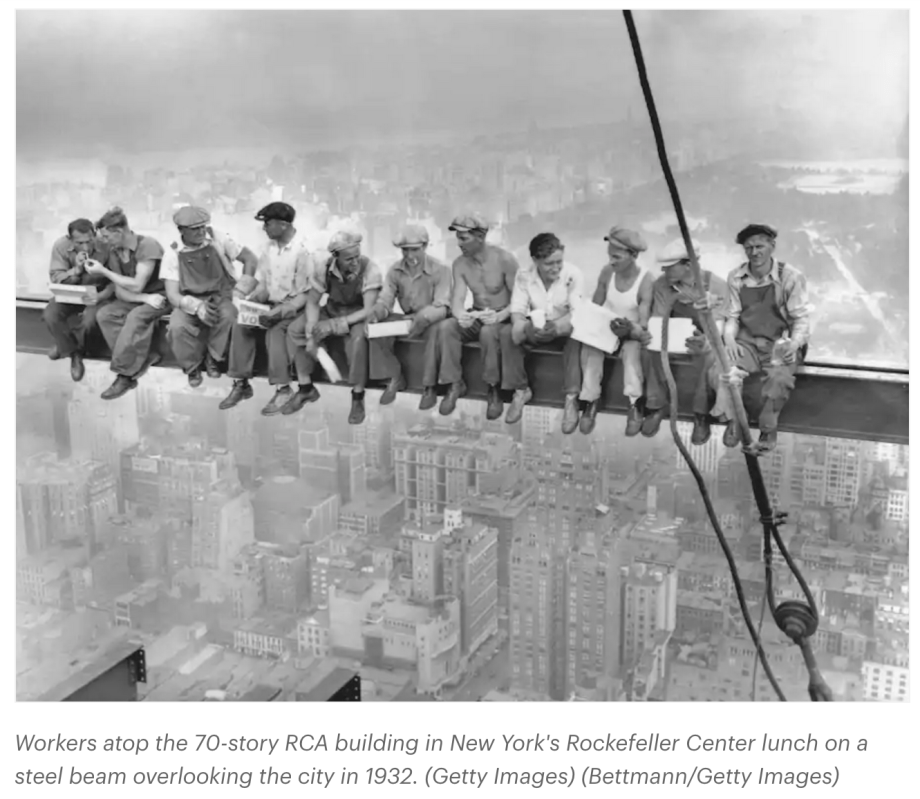
What Would Be The Iconic Picture Of Ministry Leaders Or Pastors?

  • “Men At Lunch”
  • “Every Labor Day, it is shared across social media, in tribute to those whose perspiration and determination built this country.”
  • Eleven individuals
  • On a steel girder in New York City
  • September of 1932
  • Close to the height of the Great Depression
  • On West 49th Street
  • The 70th floor
  • At the erection of 30 Rockefeller Plaza, home of NBC studios
  • The 22nd tallest building in New York City at the time
  • “You see the picture once, you never forget it,” — Rockefeller Center archivist Christine Roussel

What Would Should Be The Iconic Picture Of Ministry Leaders Or Pastors?

My Selection (click here)