Category: Uncategorized

What Are You Talking About!

2,979 people follow these posts
Thanks To Every One Of You!

. . . . —. —. —. —

“What Are You Talking About?  

Have you ever thought those words when listening to a speaker publicly make a statement about something they apparently don’t see as true in their own lives or ministry situations?

  • “The church is not about trying to attract people by using the world’s means and methods.” — While the musical elements of the services are precisely just such an attempt.
  • “Part of our testimony at ‘the office’ should be reflected by our work ethic.” — While “working hard” is hardly what characterizes the pastoral staff.
  • “We are not here to entertain an audience, but to worship the Lord.” — While entertainment and applause are clearly part and parcel of the worship services.
  • “The children are the future of the church.” — While there is little attention to or investment in the programs involving children.
  • “With many ministries, the teenagers are leaving the church after they graduate from high school.” — While the youth pastor is allowed to do a mediocre-to-poor-to-terrible job (Some, merely waiting for an opportunity to be a lead pastor).
  • “We need to be sharing the Gospel!” — While there are few to no examples of that by the leadership and pastors.
  • “Humility of mind and a willingness to die to self are what marks a true believer.” — While their own actions and words have been anything but an example of humility and selflessness.
  • “We are brothers and sisters in Christ. God’s church is a family!” — While there is little concern whether people stay or leave.

The disconnect is all too real in ministries and local churches.

Then, leaders and pastors lament the lack of attendance and involvement by God’s people, and do not grasp how contradictory, if not insincere, it all comes across.

Then, they challenge and chide God’s people to invite others to church with little understanding of how confusing, if not hypocritical, they sound to those in the pew.

They preach as if they are in compliance with the standard they espouse, while not realizing how disingenuous they sound to those who know otherwise.

No — I’m sorry, but there are reasons that the local church has fallen on hard days. One of those reasons is a woeful lack of self-awareness — a lack of clarity and honesty about what is said versus what is actually and personally done! [1]

Richard Baxter, addressing the colleagues in his day, says . . . 
“It is a sad thing so many
of us preach our hearers to sleep, but it is sadder still if we have studied and preached
ourselves to sleep and have talked so long against hardness of heart till our own hearts
grow hardened over the noise of our own reproofs.”

. . . . 


1. Yes, every one of us is guilty of not seeing ourselves as clearly and honestly as we should.  We all think that we are better husbands/wives, parents/children, friends, Christians, and workers than we are in fact.  However, all do not stand behind the pulpit or teach the Scriptures — James 3:1

If You Can Fake It, You Have It Made

The three classical elements of influence are . . . .

Logos: The logical element

Pathos: The emotional element

AND

Ethos: The credibility element — the genuineness of the speaker in the eyes of the audience.

“The secret to success is sincerity.
If you can fake that, you’ve got it made.” [1]

Ethos is about authenticity, sincerity, honesty, and trust. Does the audience believe that the speaker has the best interest of the audience at heart? Is what he is saying truthful, honest, fair-minded, and genuine. Is there any guile in what is being said and/or done?

Ethos is audience-dependent. Credibility and trustworthiness are depended on who is listening. We understand that we trust certain writers and journalists in our own media habits and wonder how someone can believe what this-or-that one is saying.

The same is true when it comes to preachers. There are those we deem credible, and those we listen to with great reservation.

Lose your credibility as a speaker (or as a pastor) and over time and with enough people, and you will have to search for a new audience. There is a spiritual mantra that is often used to describe that . . . .

“I’ve been praying about it, and the Lord has been speaking to my heart
about considering a different ministry.”

As has often been said, the people will forgive just about anything — incompetence, laziness, mistakes, terrible mistakes, and even poor shepherding, but when they realize that you are inauthentic when they lose trust in you, you may be the official leader, but you are no longer leading or influencing God’s people. You will find it difficult to stir them to get on board.

As I have visited a number of people over the past months, who are still struggling with Covid and the fears connected with this pandemic, difficult health problems, financial trials, and/or rough family situations, I am reminded about the disingenuous nature of far too many pastors who never even paid a visit to them for months, if not a year or more. They portray that they are in regular contact with this-or-that family, but they are duplicitous. If there has been any contact, it has been by a text message, a short phone call, a brief email, or through a deacon. You might think otherwise from the nuanced comments from the pulpit!

When a pastor, associated pastor, assistant pastor, youth pastor has lost credibility, it is probably too late to try to pump out the accumulated water. It may take time, but God’s people get it. The ministry is about him and his, not them and theirs.

Then, you may well witness an exerting one’s pastoral position and office. When the credibility is lost, it easily moves to consolidating power and authority — controlling who serves in leadership positions, suggesting and asking for pledges of loyalty from the staff, changing the constitution and by-laws to avoid further challenges, using other leaders to protect and defend, and calling up sympathy from the pulpit.

Why? Lost credibility — not because of the critics, but because the critics see through the veneer of “faking it.”

Ethos is a genuine concept and operates in all kinds of speaking situations — and it includes the pulpit. When one is seen as disingenuous and duplicitous, the ability to influence is gone, and the ministry is headed for some dry and dusty days until a new leader shows up to resurrect the work.

“Ethos” has taken a beating over these last two years when it comes to the ministry and the pulpit. Not only are there a good number of people who are changing churches, but it is because there are a good number of ministry leaders and church pastors who have experienced a severe loss of credibility.


1. Attributed to novelist, Hippolyte Jean Giraudoux.

Actually, I Never Expected An Honest Answer.

Over the years of ministry, I have asked many a potential pastor or staff member, “Are you teachable? I never expected an answer that would reveal whether or not we should or should not hire them. I was actually making a statement that I could come back to one day.

I mean, honestly, who would answer that question, “No . . . I am not teachable”?

Even if the individual wasn’t teachable, they might be oblivious to that condition. Also, most understand that we all think that we are better than we are — Proverbs 16:2, 21:2, 13:5.

Nevertheless, it is an important question if we are going to improve — improve as fathers, husbands, wives, parents, children, employees, friends, and pastors. When we lack “teachability,” we will hit unexpected walls. When we hit those walls, over and over, we will fail to grasp what is happening; what is happening is that we learned little to nothing from the last hit or crash.

We can “want,” and not do what it takes to get the “want” — Proverbs 13:4 — The soul of the sluggard desireth, and hath nothing.” He wants, but he is unwilling to do what it takes to have what he wants. Likewise, we can want to improve, but we can be unwilling to admit we need to correct course.

We have become unteachable. We cannot learn the lessons we need to learn if we stay with the comfortable; if we become complacent and/or refuse to hear what the situation is calling on us to do shouting!

This principle is so obvious post-2020. Listen, some of God’s people aren’t coming back! Some pastors and leaders can keep saying and believing otherwise, but it isn’t happening. Some serious pastoral missteps took place during the past “two years” — maybe long before then. Members and friends have left and are not coming back because of those ministry failures — your pastoral failures. You can either learn from how you handled mishandled the situation, or you can demonstrate that you lack even a modicum of self-awareness and keep waiting for the great return.

When a ministry drops in attendance by 25 to 50 percent, or a youth group can’t even muster 30 percent of what it used to be in attendance, it is beyond time to get serious about the subject of teachability. There are two biblical words for addressing that need — honesty and humility. It is time to deal honestly about what was and was not done over the past years, and it is time to show some humility of mind.

No, I never expected a reliable answer to that question during an interview. I hoped that one day, when I knew that I would need to have a hard talk about a serious “misstep” and when I  might well face some fatal resistance, I could call it up for the good of that ministry member . . . .

Remember when I asked you during the interview whether or not you were teachable, and you said, “Yes, — I believe I am.” You are not seeing this situation clearly, and it is because you are stubbornly refusing to see it with honest eyes. It is clear, but you are not teachable as to what has happened. You lack the humility of mind to face reality. If you do not learn from what is obvious to those around you, you will create your own “glass ceiling.” You will not improve, but will learn to blame other factors and people for your failures. 

That principle is true when it comes to
marriage, family, child-rearing, employment, and pastoral leadership!

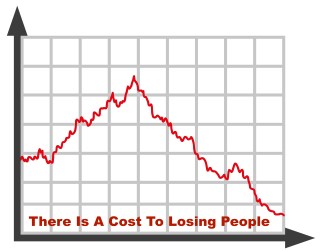
The Cost Of Losing The “Pew Tithe”

What Do You See Looking Ahead?

The “Pew Tithe” is one of the most valuable assets to an effective church. While many take note of the “financial tithe” to assess the ministry’s strength, the “Common, Ordinary Folk Tithe” is equally important.

The time and energy that many people contribute to the ministry is no small endeavor.

Anyone who has . . . .

  • headed up a Bible study,
  • played the church piano, organ, or orchestra
  • worked with the youth group weekdays/weekends,
  • served on a church board,
  • sung in the choir,
  • prepared special music,
  • directed the choir,
  • planned & prepared a shower,
  • ministering to families in times of need,
  • done repairs throughout the church,
  • volunteered to cut out, prepare, and/or work on a mailing,
  • engaged in mechanical repairs,
  • been greeters-ushers,
  • special services,
  • work with the audio & visual,
  • served in “AWANA” or the like,
  • worked in the kitchen,
  • taught “Sunday School” / “Junior Church” / “Junior Choir”
  • worked on an all-church presentation,
  • et al.

. . . . know the time and energy involved.

And Yes — there are many who have served in far more than one!

The importance of people who serve in the ministry
is crucial to the effectiveness of the local church ministry. 

In fact, their involvement is even more important than the time and energy because their involvement in ministry is all part and parcel of the supportive underpinning that runs through the woof and weave of the local church fabric.  Any pastor knows that involved people are supportive of the ministry and form the financial backbone through difficult days.

Add to that value, experienced and mature saints,
who have served for years in ministry, yours and others!

Lose those people and lose some of the strength and effectiveness of a local church ministry.  I think of individuals and families who were so important to the operation of the church ministry, especially those “people persons” who made others feel welcome, stepped up to help others in the fellowship, and attracted others to join in an attend and serve.  People come because other people are caring, loving, kind and because others are serving their needs and the interests of their families.

From the beginning and throughout the years of building a strong local church, it takes people to have an impact in a community.  Lose that “Folks Tithe,” and you have lost some of the “relational tithe” that goes into a ministry, and it may be far more than a loss of dollars.  It may be a loss of support, social enjoyment, exhilaration, new membership, and/or the opportunities to do more as a local church – together.

“Social Capital” is built on relationships.  It is a way for a pastor to be in “two many places at the same time” — he with a few, and many others with others!

As has oft been said, and with so many things in life . . . 
You may not appreciate it until you have lost it!

Sorry, There Is No Correlation!

Correlation - What I Learned Wiki

There’s absolutely zero correlation between being a good-to-great preacher and understanding the power of relationships! Full stop!

There are those who are good-to-great preachers who have little understanding of how meaningful relationships are to effectiveness and influence in ministry and/or the local church!

In fact, there will be many an average-to-mediocre preacher who will be more effective and influence more lives because of the strength of his relationships.

People listen because they respect and regard the person speaking. Lose that respect, and the best preaching is passively attended to, and for some, he is a tinkling cymbal for others.

The proof of that is easily demonstrated.

  • Just reflect on how you listen to those you have little regard for — theologically, professionally, or personally. Sorry, but I don’t listen to everyone with the same weight — and neither do you — and neither do your listeners.
  • Who was the teacher that you remember the most?  Why?
  • Ask the average adult what youth pastor had the most influence on them as a teen, and it will be the youth leaders who had the best personal relationships.

It was not who was the best speaker or theologically informed, but who had the highest emotional intelligence — who was the best people person.

A poor preacher may have more influence in the lives of God’s people than the best of preachers because God’s people know that he genuinely cares for the flock.

√ Develop your speaking skills!
√ Keep improving at communication.

√ But the bottom line is . . . .

People listen to people.  

People give the right of influence to those who are seen as caring, interested in, and loving. 

7 Ways To Set The Church Culture

. . . . 

Corporations, Social Organizations, Fast Food Businesses, Football Teams, . . . and even churches have a “culture.” 

  • “Culture” is one of the reasons Chick-fil-A has cars lined up around the corner, and people love going there.
  • “Culture” is why you are reluctant to go to the post office — sorry, but it is true.
  • “Culture” is why you actually want to buy from some businesses, even if the price is higher.
  • “Culture is why some airlines attract, and others repel.
  • “Culture” is why some businesses attract employees, and others struggle to fill their positions.
  • “Culture” is why some organizations are highly effective, and others continue to fail.

. . . . and Culture is why some churches are growing, and others are on the decline

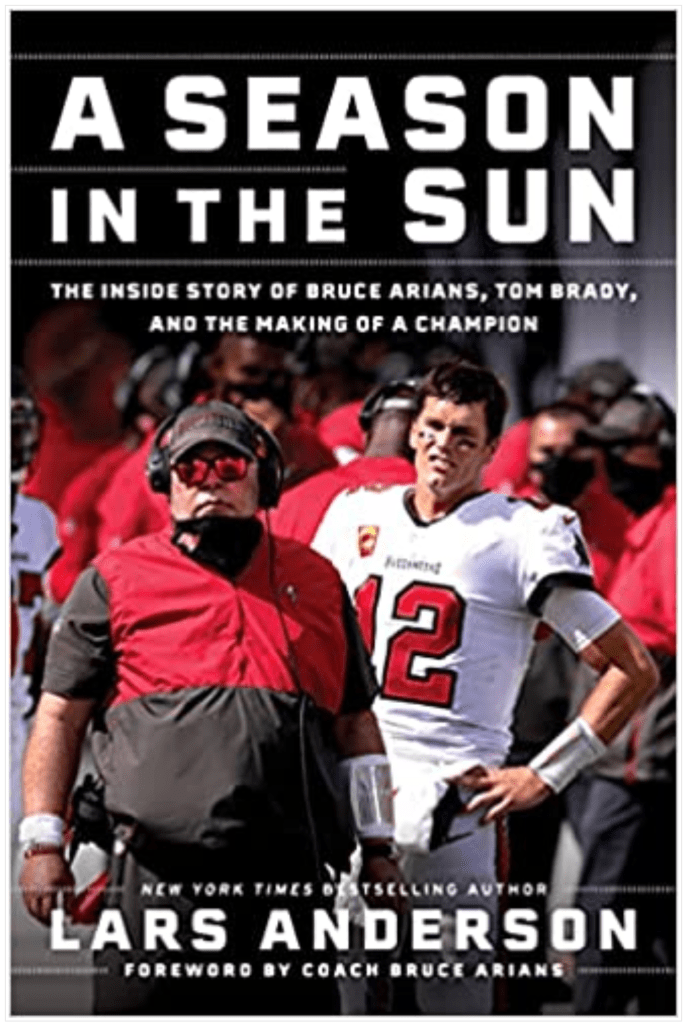
This week, Brian Dodd published an article on Tom Brady. Those who live in Tampa, Florida, have an enlarged interest in Tom Brady because he is the quarterback of the Tampa Bay Buccaneers, winners of Superbowl LV.

Here are the seven points that Dodd gleaned from Lars Anderson’s book, “A Season in the Sun,” along with a relevant statement on each of those points. If you want to read the full article, the link is provided below.

#1)Relationships/People Skills/Emotional Intelligence: “His humility helped change the team’s culture.”

#2) Presence:  “Tom was consistent in his demeanor and approach.  He brought a sense of calm to the entire team.”

#3) Preparation: “They watched him in team meetings.  Tom always sat in the front row and took notes like a rookie trying to impress the coach and make the team.”

#4) Practice: “During practice Tom was very demanding of everyone.  He was unforgiving with poor habits or execution.  Everything had to be done 100% perfect or they would do it again.”

#5) Work Ethic:  “Everything was about hard work.”

#6) Mentoring:  “When Tom spoke, everyone listened.  His words to his teammates were always firm and final.”

#7) Results: “What ultimately legitimizes a leader and an organization’s culture is results.”

Ministries and churches have effective and ineffective, as well as healthy or unhealthy cultures.

“Church Culture” is why some . . . .

  • churches have cars lined up around the corner, and people love attending.
  • people are reluctant to revisit this-or-that church.
  • people actually want to give to this-or-that ministry, even above the tithe.
  • churches attract new members, and others repel.
  • ministries attract employees, and others struggle to fill their positions.
  • churches are highly effective, and others continually fail.
  • churches grow, and others are stagnant (at best).


1. Several good podcasts address “church culture” —  Link.

2. PDF of the whole article by Brian Dodd — Link

Lost Momentum

Let off the gas, and the car will slowly lose momentum, merely because of the laws of physics. Friction, coming from all different directions, will ultimately slow you down without any assistance from the brakes. An incline on the road ahead will contribute to the swifter loss of momentum, and a decline will make the inevitable take a little longer.

Diesel truck operators know how to brake beyond letting off the pedal and without wearing down the wheels’ friction braking system. It is called “Jake Brakes” — and results in a loud roaring sound as the engine is used for braking and slowing down the forward momentum. [1]. At times, you will see a posting coming into a small town or city . . . .

Turn off any machine, and the motor’s momentum will slowly dissipate. With many of today’s motors, there is also an internal braking mechanism that is part of the motor’s design. The motor’s design aims at quickly slowing the remaining momentum that resides as kinetic energy. [2]

Most all of us can identify a time when we lost “momentum,” Some will say that they have lost their mojo. We were aiming at a goal, and something has caused the forward progress to be impeded, and we are slowed down. We hit a significant bump in the road, and we have let off the gas. We struggle with staying upright on the horse, pulling back on the reins, and slowing down. For some, the forward movement can be regained quickly; for others, it takes longer.

There will be those who will point to Covid as the cause for what has disrupted the forward progress of a ministry or a local church. For some, it may be plausible, but it is not probable. They lost momentum long before this hill!  

Surely, Covid has been one of those bumps! Cultural and political issues have also made it difficult to stay upright. No doubt that it was hard (if not impossible at times) not to pull back on the ministry or pastoral reins. 

However, may I suggest that for some ministries and churches, the momentum was lost far earlier. The loss of momentum was actually aforetime. The pandemic and/or political potholes of 2020 only further slowed down any momentum that may have been stored from the past. They let off the gas and/or were already applying the brakes before 2020 arrived. Their taillights were already red, long before the intersection that was ahead, before it was even in sight.

The question is . . . . How would you know that?  

There are those ministries and churches that would like to point to 2020 and make the claim that what is taking place is due to the turbulent times we have and are experiencing. That claim is not implausible, but it may be improbably. The loss of momentum well proceeded 2020. Like some politicians, there are those who want to blame Covid, BLM, President Trump, Wokeism, and all the disruptive elements that have made it more difficult for everyone.

The momentum was lost when the mission of the ministry and church was lost.

— that of reaching a lost world — 

That is the church’s mission. 

Everything else is part and parcel of that mission, but it is not the mission.

The mission is not — “As you go into all the world . . . . 

  • pray 
  • sing praises to our Lord
  • fellowship with God’s people
  • lean and study God’s Word
  • worship the Lord
  • glorify God

. . . . 

Those all contribute to the mission. 

They are part of a larger mission!

. . . . 

BUT

They are not the mission.

The mission is not an inward focus, but an outward focus on the lost world.

“Lift up your eyes, and look on the fields; for they are white already to harvest.”

. . . . 

That biblical truth is evident when you realize that if these God’s mission for us, then He would have taken us to His home the moment we were saved. We would all be faring much better at all these and more in His presence. But instead, we have been left on earth to bring something with us!  

His mission is our mission — Luke 19:10 — to seek and to save that which was lost!

Jesus took on humanity because seeking and saving was His mission!

Jesus hung around sinners because this was His mission!

Jesus talked to Nicodemus in the night because it was His mission!

Jesus talked to the woman at the well because this was His mission!

Jesus was crucified because that was His mission!

Jesus would rather teach than eat because reconciling people to God was His mission!

Jesus rose from the dead because He fulfilled the aim of His mission

Jesus said, LOOK, the fields are white. He said that to His disciples because seeing the lost was His and is our mission!

Everyone one of the Gospels defines the mission which was given to us . . . . 

  • Matthew 28 — “Go ye therefore, and teach all nations, baptizing them in the name of the Father, and of the Son, and of the Holy Ghost: Teaching them to observe all things whatsoever I have commanded you: and, lo, I am with you alway, even unto the end of the world. Amen.
  • Mark 16 — “And he said unto them, Go ye into all the world, and preach the gospel to every creature.” 
  • Luke 24 — “repentance and forgiveness of sins should be proclaimed in his name to all nations, beginning from Jerusalem. You are witnesses of these things. “
  • John 20 — “Then said Jesus to them again, Peace be unto you: as my Father hath sent me, even so send I you.” 

And again in Acts 1, and throughout the book of Acts!


What are we doing that will matter 60 years from now?

I say 60 years from now, because 2021 is the anniversary of Faith Baptist Church. 

Someone was on mission, as an electrician by trade, not a pastor. 

His name was (Pastor) Dick Nelson. 

What he did in organizing, building, and reaching the community made a difference years after he left this world.


No, some lost momentum because they lost sight of the mission long before 2020. They went inward, not outward. They became focused on the institutional instead of the relational. It wasn’t Covid, BLM, President Trump, the Woke, et al. — It was the ministry leaders and pastors who lacked the focus of our Lord, no less possessed by the woman at the well — “The woman then left her waterpot, and went her way into the city, and saith to the men,” She got the mission right!

She didn’t know a lot. In fact, she had a lot of things theologically wrong. In fact, she had a lot of things wrong about practical life and living – five husbands later. But she left her waterpots behind — the very reason she was there in the first place was to get water — and went back to the city and said — “Come, see a man, which told me all things that ever I did: is not this the Christ?”

No, for some, they may point to a pandemic, culture, society, movements, and the like to explain the downward direction of their ministry, but it is really the decisions they made long before 2020. Their claim may sound plausible, but it is about a lost heart to aggressively reach out into the community that God has placed us in as believers, and corporately as “the church.” Leadership has failed, and facts are stubborn things.  There is little effective outreach, few are being reached by those in ministry, not to mention those under that leadership, and some church ministries are in serious decline!

Some have gone to the “Jake Brake,” and the loud noise is a lost world falling into eternal separation from God! [3]


. . . . 


1. https://www.truckingtruth.com/wiki/topic-91/jake-brake

2. There are a number of ways to speak about the loss of momentum — decreasing, fading, falling, reducing, abating, declining, depreciating, diminishing, and/or dropping. 


3. Link:  A Great Read – By Amy Carmichael — Daisy Chains!

You Can “Manage” A Problem, Or You Can “Solve” A Problem, But You Probably Can’t Do Both!

Ministries, and specifically the local church, are facing difficult days.  For many, it was only heightened when the ministry or church turned onto the “Trump-Covid-2020 Political Highway.” They lost their focus, their calling and mission, and decided to turn onto a road that was something other than “Church Street.”

That turn has resulted in many ministry leaders and pastors facing significant problems and criticism.  Some problems are reflective of the prophetic course of events — as we approach the last days.  Other problems may have nothing to do with following the Lord or the Scriptures, but may be of their own doing.

Some leaders will attempt to manage the problems. Others will seek to solve them. 
You probably can’t do both at the same time.

I say that you probably can’t do both because trying to manage a sticky situation usually interferes with the solution.  It constantly compromises the solution. “Managing” is at odds with the resolution, in that it seeks to avoid what the solution – resolution requires.

The solution-resolution dictates that “this-or-that” be done, but as one seeks to manage the problem, doing the “this-or-that” is dismissed and/or avoided.

What you ought to do, what you need to do, what is so obviously right to do, is pushed aside by trying to manage the situation, by trying to resolve the problem without doing what the solution dictates!

More than likely, if we have any years of experience (or if we are married, if we have raised children, if we work in the competitive world of business), we have felt that pull of “managing a problem”  — figuring out a way out of a problem that makes it all easier, more palatable, less humiliating or embarrassing, better on the self-image, and/or less painful.

. . . . 

√ “Managing” puts the solution on top of the list, instead of people & relationships.

√ “Managing” looks for a way out, instead of going deeper in, instead of a willingness to find out what has actually taken place and our role in it.

√ “Managing” seeks to solve the wrong problem — that of addressing personal guilt and a softening the blow to the ego.

. . . . .

. . . . 

Some leaders will attempt to manage the problems. Others will seek to solve them. 
You probably can’t do both at the same time.

The Five Best Reasons To Attend A Funeral — Maybe Today

I am sure there are a good number of reasons to attend a funeral,
but I believe these may be
 the five best reasons,

. . . . .

#1) People “Never” Forget It:  There are acts of kindness and helpful deeds that people will long remember, but in times of pain and distress, such acts of kindness are just not forgotten.

I was reminded of that principle when my son shared how grateful a friend was because of his response in a time of a painfully personal and family juncture.  

Painful experiences are the very times when we need others just to be there. We all know that. Who hasn’t heard someone repeat something like this. . . . 

“There isn’t anything you can say, 
but just being there speaks.”

Being there during . . .

  • times of loss,
  • painful family experiences,
  • deep hurt,
  • times of relentless sorrow and regrets,
  • foreboding health information, or
  • passing — at the bedside of others who are processing the prospects of death (theirs or loved ones)

. . . . . MATTERS to people and leaves a lasting impression!

. . . . .. . . .

#2) It Is Loving:  Jesus purposefully delayed His coming to the funeral of Lazarus. Interestingly, it is repeatedly stated that He loved. He loved Lazarus, and he loved Mary, and He loved Martha. In fact, those around Him knew and even stated how much He loved Lazarus as “He Wept.” The point being made is that whatever the reason [and we are told the reason] for His delay, it was not a lack of love!

How sad that “selfishness” even creeps into our lives when people have died. Someone who was loved by and important to others, or us, has died! Isn’t that reason enough to attend the funeral?  

But our own schedules and time can trump selflessness! We can excuse our way out and give reasons why we could not make it. The truth is that we pretty much do what we want to do, if we want to do it! — at least in America.

Several pastors have said to me over the years that they are disappointed that God’s people are far too sporadic and careless when it comes to attending funerals. I have often responded . . . . “They have been sitting under your teaching!

Selfishness is too often the cause for not being there when we can and when we should! When we can’t figure out how to be there, it is because we don’t want to figure it out! We pretty well do what we want to do when we want to do it bad enough!

. . . . .

#3) It Shines A Light On The Name Of Christ:  Let your light so shine that they may see your good works and glorify the Father! That is what we teach and believe.  

There is a lot of “Twisted Theology” that is created and used to excuse people and pastors out of doing what is right. Who cares at what church the funeral is?! Not attending doesn’t strengthen the Gospel! Attending a funeral doesn’t mean that you agree with this-or-that theology. In fact, the lost world will attend a funeral even at your Bible-believing church.  

At times, it is just hypocrisy to talk about the truth of the Gospel, the need of a Saviour, the hope of the believer, and our love of others, and then not be present at a funeral when we can be and should be. It dims and darkens our testimony and the name of Christ.

. . . . .

#4) It Is A Wonderful Teaching Moment:  As Solomon states in Ecclesiastes — Better is the house mourning than the house of banquet, for there men take stock of life and living! The living will lay it to heart — even if the living are believers!

Attending funerals and churches that are other than one’s own is profitable and illuminative. It not only helps God’s people learn about other religions, but should clarify and strengthen what we teach and believe about life after death.

It is also a great opportunity to teach your children that it doesn’t matter how well you know/knew them, they matter — whether they be well-known or unknown to many, a remembered or forgotten believer, or someone in our proximate world (“Who is our neighbor?” — Those proximate to us on the road, as we live life ) and who was loved by others!

. . . . .

#5) It Is Good For Godly Fellowship:  It is good for God’s people to gather together and mourn and celebrate. There will be those who we haven’t seen for years. Some who have since changed churches will be there. Members of this-or-that family that we haven’t had the opportunity to connect with will be present. Hopefully, we will all be reminded about the Gospel, and the eternal hope of God’s people at death.

If there are stresses and strains among God’s people, in or outside of the local church, funerals have a way of relieving some of that tension. Differences are less significant when thinking about how life will end for all of us one day (if our Lord has not yet returned for His people).  If not, let me restate — “They have been sitting under your teaching!”

It is a great time for some kind words, caring conversations, and loving interaction within the community we call “the church.” A lot of good can be accomplished in such situations. To miss this opportunity to show the love of God to God’s people within and without is to fail at understanding ministry!


. . . . .


Silence Is Golden, But Sometimes It Is Yellow!

  • “It won’t matter.”
  • “It won’t do any good.”
  • “Others have tried.”
  • “Let the Lord take care of it.”
  • “It’s time to just move on.”
  • “Time will tell.”
  • “It will only hurt your name at the end.”
  • “Just stay out of it.”
  • “You will only be more frustrated.”
  • “That’s not a hill I am willing to die on.”
  • “Let someone else say something.”
  • “It’s not my battle.”
  • “You left, and it’s not your business anymore.”

That is what you will typically hear when you attempt to speak up and/or legitimately try to address a situation that needs addressing. They all have an element of truth to them, and it is not that the case cannot be made for any one of these oft-repeated exhortations.

Add to those exhortations the cover stories, words of censor, and the intimidations of those who have decided to protect the status quo. It all contributes to the all too common decision to just stay silent!

Both the exhortations of others, and the words of those in position & power, have the same aim and desired outcome, to silence people who . . . .

√ care about what is happening, and love those who are affected
and/or
√ refuse to allow the decisions, actions, and offenses to continue without someone speaking out

At times, I have been disturbed at the silence of theological friends, fellow-workers, leaders who were elected to a position to address issues, good members and friends of a ministry who by temperament just walked away quietly, and those who merely accepted the narratives and explanations provided.

If someone uses vulgar language, takes what is not theirs, tells an outright lie, swears, slanders another, speaks maliciously about others, or even impatiently honks their horn at the driver who is sitting at the green light, most would easily identify such as wrong and sinful — sins of commission!

But silence, failing to speak up when one ought to speak up, is not as obvious a sin.  Nevertheless, it is a sin of omission.  We should have done what we did not do!  We failed to at least speak out and apply whatever weight we have as a person to this-or-that situation.  That is why those who served on a ministry board, as advisors to a ministry leader, deacons, fellow pastors & elders who failed to speak up when they could have and should have, need to resign or be removed from office along with the wrong-doers.  They were also part of the problem!

Silence, not speaking out when you should have spoken up, is a sin of omission.  Sins of omission are less obvious, less accusatorial, and therefore more coverable.  It takes quite a bit of evidence to call someone out on this sin.  Rebuke for such a sin typically requires a person to be caught red-handed — “You stood there and saw-heard it, and said-did nothing!  You didn’t speak up?”

Nevertheless, sins of omission will be part of the standard of judgement when we all stand before the Lord.  If you were in a situation where you should have spoken up, if you were given a position to be a voice, if you knew about impropriety, self-serving decisions-actions, abuse, partiality, injustice, immorality, or wrong-doing and remained silent. There will be a day of accountability.  That day may be here on earth, but it will surely be part of that day when all of us will be challenged as to how we built upon the foundation — I Corinthians 3.

Such silence will be part of the wood, hay, and stubble — and on par the sins of commission, because . . .

Silence is Consent!


If thou sayest, Behold, we knew it not; doth not he that pondereth the heart consider it?
and he that keepeth thy soul, doth not he know it?
and shall not he render to every man according to his works?

— Proverbs 24:12 —

. . . . .

Let’s stop talking about courage, integrity, authenticity, et al.
when we can’t even speak up when we see wrong being done and we stand by silently!

Have You Seen It:  Sing Louder
Alternate Link: https://youtu.be/ofcs9Y7qL4s