Category: Uncategorized

“Contactlessness”

Because of the pandemic, the word “contactless” has taken on a new meaning, or maybe a singular meaning.  I don’t know if that word ever occupied a meaningful place in our daily vocabulary.  For most of us, making “contact” with people and things was just part of life — not so today.

We have even developed icons to communicate it  . . .

Many of us have heard or made the complaint . . . 

“How do I get in touch with them?”
“There is no way provided to make contact with them.”  

Some businesses would not provide a phone number or an email address in order to directly contact them.  They purposefully avoided providing the opportunity and information needed to talk with them.

“Fill out this form and we will get back to you.”

At times, you found yourself paying for a subscription or service, and you hunted and hunted for a way to contact them and cancel. 

Sometimes, it was a war of attrition on the phone; who was going to last the longest as you were placed in an unknown phone cue and/or put on hold, sometimes for hours!

More recently, you can opt to  “chat” with someone about a problem or situation, but too often they do not have the answer or can resolve the problem, and you would just like to talk to someone — to make real contact with a real person and communicate audibly!

Add to that, texting, which can be used to avoid personal vocal contact.  You can keep the interaction “short and sweet!”  It is a way to avoid conversations that may be longer than wanted and/or can branch off in different directions. 

Nevertheless, one of the foremost created differences within God’s creation is that we can engage in “propositional language” [1]. We can communicate on a level that is not found anywhere else in the created world.  Books, magazines, newspapers, libraries, talking heads, speeches, music, art, sermons, lectures, classroom teaching, blogs, and podcasts all illustrate that foundational reality. 

Engaged in verbal and non-verbal communication is how we spend our day. 

“Solitary confinement” is a punishment.

Speaking to others personally is how we have been created as social beings.  The choice of words, vocal intonations, body language, visual clues, gestures, et al. are all part of what makes personal and/or direct CONTACT important.

Nevertheless, as we all know, some purposefully avoid contact. 

  • Sometimes, it is because they believe that they lack the social skills needed. They are introverted because they have not been very effective or successful at interacting.
  • Some, because they are just impolite, others were “never taught by mom and dad” how to properly engage.  Some are ill-manner and disrespectful by a lack of “education.”  They do not return calls.  They do not let you know that they received your text or email until it suits them or even never.  They do not give any update as to where they-we are in the process.
  • At times, guilt produces avoidance and silence.  They do not want to make contact because they know that they have been rude in not responding sooner, or that they have been wrong and do not want to deal with that wrong-doing.
  • Some find it a useful strategy.  It is a way to not deal with a problem or a difficult situation. “Hunker down” and ride it out with the hope that it will all fade away.
  • Add to that, selfishness.  Life is about them and revolves around them.  Contacting others happens when a need arises in their life, and they now need to contact to get the help or materials needed.  We all know how that works, a request for help from someone who hasn’t contacted us until they needed help.

Contact is part and parcel of a biblical faith, whether it be in evangelism, healthy church relationships, regular weekly fellowship, or shepherding the sheep.

While there has been an “acceptable” & significant shift away from personal and meaningful contact [2], the difference between contact and contactlessness has not been lost by all who have been created in His image.

We all know that . . . .

  • a handwritten note matters,
  • a meaningful response speaks a positive message,
  • a piece of mail with a handwritten address will more likely be opened,
  • allowing time to engage personally when a relationship has been injured makes a difference in the end response,
  • a promptly returned phone call / email / message conveys care and concern
  • having a “face to face” (even with Facetime) conversation is invaluable,
  • hearing a voice is important,
  • receiving a personal call speaks loudly, and
  • part of the grief at a funeral is the lost interaction and contact.

To do less is what we have been called out of as God’s people.  Personal, direct, meaningful conversation is what can and should make us different.  “Contactlessness” may be needed in a pandemic, but it is not Jesus! [3] [4]


1. A great read is the book by Mortimer J. Adler — “The Difference of Man, And The Difference It Makes.” 

2. There are various examples of that present-day shift.

  • Wedding Invitations via email
  • RSVP by text/email
  • Fewer handwritten letters
  • “Thank You Notes” with just a signature
  • Voice mail / Texting / DM
  • Social media

3. See: What Should One Rightfully Expect As A Response?

4. While there are biblical grounds for personal separation, not engaging with those who deny the faith, not responding to a fool (answer — but not like a fool, but as a wise man) in his folly, trying to maintain peace by not speaking your whole mind, such can become cloaks to hide behind, and disingenuously cited to support sinful attitudes and decisions.  Game playing is not a Christian virtue, no matter what the purported biblical explanation.

Maybe the Christians in Afghanistan can author a post that will be more helpful.

The excluded middle, the strawman argument, asserting causation from correlation, ad hominem, digression, diversion, anecdotal examples, and many more [1] are all typical and fallacious ways to duck legitimate criticism.

As I listened to a pastor defend himself from the puplit on Sunday, I was reminded of how easy it is to make an argument that seems so persuasive yet so disingenuous.

Some say the music is too traditional, and others say it needs to be more lively.  Some say we are too narrow, and others think we are too loose.  Some want us to be less political, and others believe we should address the issues of the day more than we do.  Some like small groups, and others do not.  Some. . . . Others . . .

You have probably heard this argument being made by those who are side-stepping criticism and/ or addressing any questions about the decisions or actions they have taken. 

Behind it is the subtle point that there are people who agree and disagree, and therefore no one is right or wrong.  The point being defensively asserted is that there are no decisions that can be made without being criticized, so all criticism must be disregarded.  The “pastoral defense” is that there will always be criticism, but the criticism is merely a difference of opinions.  Therefore there are no grounds for legitimate criticism since there will always be two sides that disagree.

The argument is called “False Dichotomy” or “Faulty Dilemma.”  The leader or pastor is facing two choices, facing a dilemma — What is a pastor do to? [2]

Therefore, any legitimate criticisms which are being made are moot. There really are no answers, and therefore, no need for any questions.  Let’s move on!

As you read more and more accounts of ministry and pastoral misuse and abuse [3], the craftiness of men in ministry, and disingenuous attempts to divert attention away from legitimate criticism about what has obviously taken place, are on full display.

Here is another recent example . . . .

For church leaders in particular, this is a discouraging season.

When I talk to pastors of any sized church, in their candid moments, despite being open in person for months or longer now,  they tell me:

      • In person attendance is still running at 40-50% of what it used to be.
      • Online attendance has dropped.
      • People they’ve known and trusted for years have left the church.
      • Volunteers don’t want to serve like they used to and many have bailed.
      • They get criticized for being too political, not political enough, pro-mask, anti-mask, saying too much about vaccines or too little, or being too left, too right, too..whatever.

And they wake up tomorrow and face the same thing all over again.

Sure, there are a few glimmers of hope: new people are coming. There are stories of life change. Not everyone left.

But when you’re facing unprecedented loss after leading for 18 months in perpetual crisis, it’s no wonder people are quitting and leaving. [4]

Obviously, there must be no position that a pastor or ministry leader can take without criticism, so there is nothing they can do.  The pastors — well, they are just stuck — you understand — don’t you.  They only have one option — to stay the course they have chosen and ignore those who question and criticize.

Apparently, there are no — good, better, best, wise, unwise, informed or uninformed, selfless or self-serving, poor, bad, or terrible — decisions or actions. It is only — “this or that” — “either-or”!

I might suggest that the season, the “discouraging season” that some pastors and ministries are facing are due to terrible decisions and actions, and too often a lack of genuine care and concern by the shepherd of the flock.

I’m not surprised — at all — by this article’s assessment on attendance!

I do disagree with the cause of any pastoral discouragement, and who are the ones who should be discouraged — not the shepherds in America, but the sheep! [5]


1.  http://www.don-lindsay-archive.org/skeptic/arguments.html

2. “But have renounced the hidden things of dishonesty, not walking in craftiness, nor handling the word of God deceitfully; but by manifestation of the truth commending ourselves to every man’s conscience in the sight of God.”

3. 5 Takeaways From A Ministry Leader Who Decided To Do One Of The Hardest Things! 4

4. https://careynieuwhof.com/how-to-lead-when-youre-facing-constant-loss-and-continual-bad-news/5

5. It is well past time to provide some candid and guileless evaluations of what has been and is happening since March of 2020.  Maybe the Christians in Afghanistan can author a post that will be more helpful!

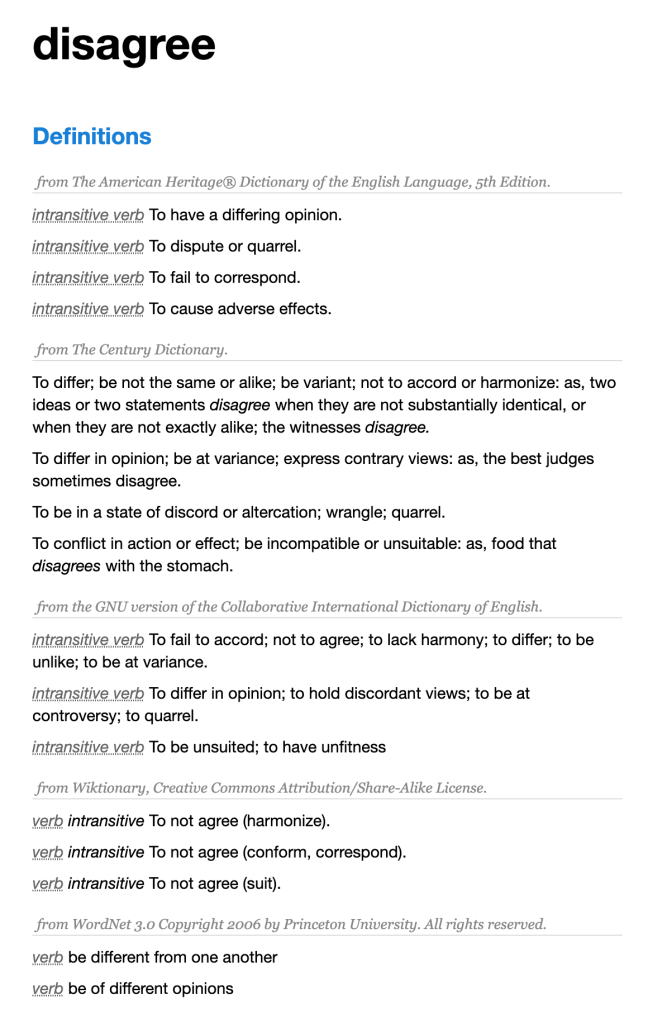
5 Expectations Of Those Who Disagree

. . . . . 

Effectively navigating a ministry or local church has its challenges. While there are long periods of time when the weather is fair and sunny, there are also days of uncertain course planning, choppy waters, and storms that interrupt those periods.

There will always be those who . . . .

  • privately differ
  • “off the record” differ and convey their disagreement with family or friends, and
  • personally and directly express their opposition to a decision or action to “leadership.”

Some of the obvious reasons for that reality is that the crew is varied in abilities and gifts [1], backgrounds and experiences are diverse, personalities are assorted, and spirituality is mixed [2] 

Sometimes, ministries destabilize and even crash, and churches crack and even split.[3]. One of the reasons these outcomes happen is because there is a woeful failure in understanding personal expectations. At times, leaders and pastors fail to grasp the reasonable expectations of those who voice their differences or disagreements. [4]. 

There are at least 5 expectations . . . . .

#1) A Response:  Those who express differing viewpoints and/or disagree with a decision or action are expecting at least a response. Whether a difference has been stated privately (and a leader/pastor is aware of such) [5], or directly, there is the expectation that there will be a genuine response. To ignore a meaningful disagreement, both known or expressed, is to communicate indifference and worse. At least respond by addressing it.  “Radio Silence,” hiding out, or “hunkering down” evinces little to no respect.

#2) A Reasonable Response: Those expressing differing viewpoints and/or disagreeing with a decision or action are expecting a reasonable response. To deflect from the issue, give a non-sensical answer, play word games, mislead or lie, and/or hide behind others is not seen as a reasonable response.  It is seen for what it is –excusing, justifying, political double-speak, and/or worse! [6]

#3) A Reasonable & Personal Response: Sending others in the place of the one who is responsible for a decision or action is seen for what it is — cowardice.  The responsibility for responding falls on all those who made the decision or took that action.  The leader or pastor should respond personally and directly.  If it was clearly a joint decision by multiple pastors/leaders, they should respond personally.  That approach is what communicates a sense of personal responsibility and mutual respect. 

#4) A Reasonable, Personal, & Caring Response:  Not responding, not personally responding, are part of an uncaring response.  More than that, the personal conversation ought to convey that they and their opinions. thoughts, insights, vantage, position genuinely matter.  “Caring less” is not only unproductive, but hardly reflects Jesus — Philippians 2:3.

#5) A Reasonable, Personal, Caring, & Humble Response:  Part of caring involves reflecting some humility.  As a leader or pastor, you don’t have all the answers and are not always right.  How about, “I think I  am / was right, but I may be wrong?” — to come across otherwise is to aggravate the situation. 

Hubris, pride, arrogance, exerting your position, and the like is not Jesus!  In word and bodily demeanor, there should be a demonstration of humility.  If there was a failure or even wrong-doing, admit it quickly (Proverbs 6:2-5).  Don’t force someone to drag you to that admission, “kicking and screaming!” [7]

. . . . . 

There are reasons that people write “An Open Letter,” [8] and one of the reasons is due to the poor handling of people, their differences, and their differing! 

. . . . . 

A Response,
A Reasonable Response,
A Reasonable and Personal Response,
A Reasonable, Personal and Caring Response,
A Reasonable, Personal, Caring, and Humble Response

. . . . . is expected!

. . . . . 

Showing respect and common decency is not only expected, but is owed to those who have and/or continue to serve and contribute to the effectiveness of the ministry or local church.

. . . . . 


1. “Spiritual gifts” motivate the responses.  A person with the gift of mercy is quick to dismiss the underlying causes or reasons and also to not understand someone with the gift of administration. A person with the gift of administration is seeking a better way to address a situation, and not understand someone with the gift of mercy. A person with the gift of “prophecy” may be focused on identifying the warning signs that this was coming and not understand someone with the gift of giving. A person with the gift of giving seeks to solve the situation by giving time and money to address it, and does not understand the need to identify the warning signs. Spiritual gifts are one of the reasons that we differ and even clash.

2. If a local church is healthy, there will be a wide diversity in spiritual growth. New, old, fairly new, very old, and all ranges in between will compose the church that is effectively reaching its “Jerusalem.”

3. There are NO LACK of examples —  of both — in recent months, RZIM / SBC / Financial Peace University or First Baptist Church of Ft. Lauderdale / James MacDonald / David Platt

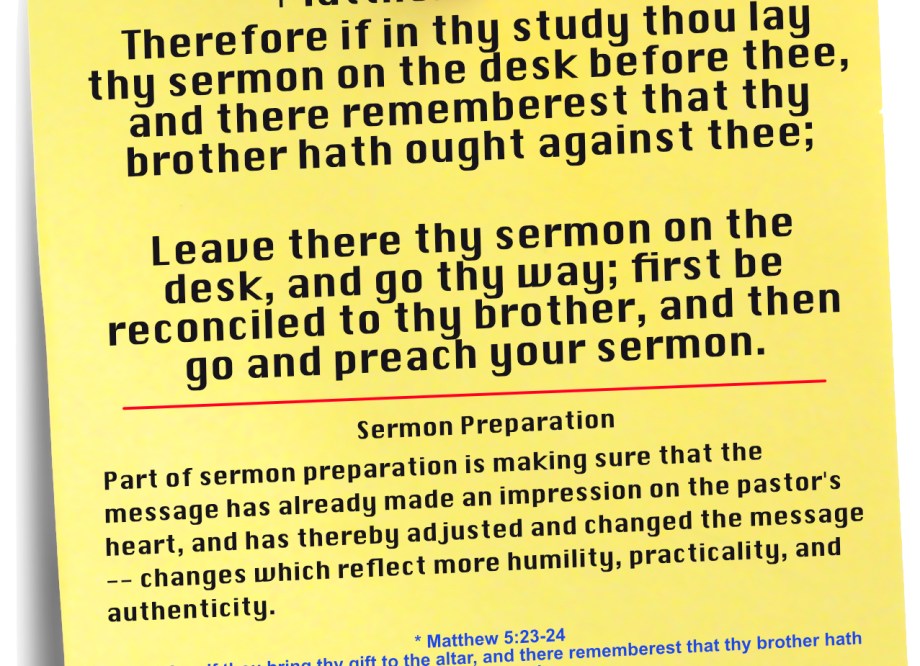
4. Sometimes, those differences or disagreements are not personally or directly voiced to the leaders, but they are known to the leader(s) or pastor(s). To take the position that someone must come to you and voice them personally and directly before you will meet any of the expectations is not only unwise, but unbiblical — Matthew 5:23-24.

5. Seeking peace and unity is not only a requirement of those who differ or disagree, but ought to be sought by those in leadership. I Peter 3:8-11 applies to both sides of the equation. Purposefully and pointedly addressing known issues and criticisms from the pulpit is not a way to seek peace, nor is it biblical — Matthew 5:23-24.

6. Let me add that throwing others under the bus, or worse yet, misleading or lying, seldom creates peace and unity. 

Note: Sadly, there are ministry leaders, chairmen of deacon boards, and pastors who have lied to cover up their self-serving and duplicitous actions.  If you think that such misleading or lying will not be discovered, you are naive.

7. How about just a recognition that . . . .

“I could have done it better.”  Not “we could have, “but “I could have.”   

Maybe even, “I could have, and should have.” 

Maybe even “I could have, should have, and did not.”

How about, “I could have, should have, did not, and my heart was not right in making that decision or taking that action.  It was unloving.” — OUCH

8. “An Open Letter”:  There are those such as Bari Weiss in the secular world, and a number of others in the religious world, especially when it comes to the abuse of others in ministry, that issued “Open Letters.”  Why?  Because they were denied a right, reasonable, honest, humble, and caring response.   The weight of responsibility is not only born by the writer of such “Open Letters,” but by those who failed to respond, and respond rightly!

9. Ministry leaders and pastors can’t speak out of both sides of our mouth by saying that people need to communicate, communicate with leadership, or should have communicated only with the leadership (an untenable position, unfollowed by the leaders themselves), and then not met the fair expectations of those who do communicate!


The Hemingway Law Of Motion

You may have heard or read a well-known quotation from “The Sun Also Rises” used to describe a good number of events, situations, and outcomes.  It is used to explain the collapse of a business [1], a political movement [2], a world order [3], a personality [4], an economic bubble [5], a leadership failure, the end of the European Union [6], and/or the socio-political [7] changes presently taking place.

“How did you go bankrupt?”
“Two ways. Gradually, then suddenly.”

―Ernest Hemingway,
The Sun Also Rises

Hemingway makes the point that things happen slowly, and then the collapse takes place suddenly.  That “Hemingway Law Of Motion”[7] may also explain what happens with some ministries and local churches.

After a series of actions and decisions, over a long period of time, suddenly an action or decision is made that precipitates a sudden collapse that “no one” saw coming.  The avalanche was building over the months and days of winter, and finally, a snowflake landed on the accumulation, and the vast movement of snow was triggered.

That might describe what takes place in ministries and local churches.  It is not this-or-that event or decision, but the building of events and decisions that finally result in a sudden avalanche or collapse.

By the way, there is a clearly stated principle that was revealed in the Scriptures long before Hemingway that we might call, the Asaph Law Of Motion . . . .

Until I went into the sanctuary of God; then understood I their end.

Surely thou didst set them in slippery places: thou castedst them down into destruction.

How are they brought into desolation, as in a moment! they are utterly consumed with terrors.

As a dream when one awaketh; so, O Lord, when thou awakest, thou shalt despise their image.

— Psalm 73 —

I cannot imagine what this must feel like!

. . . . .


Other Information & Links:

  1. https://www.advisorperspectives.com/commentaries/2021/08/13/ubiquity-complexity-and-sandpiles
  2. https://practopian.org/blog/hbowie/the-decline-of-the-republican-party-first-gradually-and-then-suddenly.html
  3. https://stormcloudsgathering.com/the-great-collapse/
  4. https://normmintle.medium.com/gradually-then-suddenly-how-the-cult-of-leadership-has-finally-died-ebb4032bd3f2
  5. https://powerfulmarketingideas.com/the-best-time-to-prepare-for-a-crash-robert-kiyosaki-updates/
  6. https://www.valuewalk.com/2014/06/how-did-you-go-bankrupt/
  7. i.e. — the death of George Floyd
  8. https://conversableeconomist.blogspot.com/2015/01/the-hemingway-law-of-motion-gradually.html

We Had To “Let Him Go.”

“We had to let him go,
not because of what he did,
but because he did not see
that what he did was wrong.”

. . . . 

Those were the works of a vice-president at a well-known Christian college in the United States.  He was sadly recounting what had just happened regarding an administration change that had taken place.

What had happened was that a fellow administrator had engaged in inappropriate behavior. He had come up from behind of a female fellow worker, put his chin on her shoulder, and spoke from that position for a few seconds.  It was not that he said anything wrong, but that he felt comfortable propping his head on her shoulder. It was just that, unthinking inappropriate public behavior.

The female employee was taken back by his actions and expressed her unease with that behavior.  There was no push for any severe action to be taken, but his actions were clearly called out by her.  In response, the head of the administration called him into his office to address the situation.

The offending administrator thought it was perfectly innocent and did not see anything wrong with what he had done — and continued to maintain that he had done nothing wrong despite the repeated attempts to convince him otherwise.  He remained unpersuaded and actually stubbornly defending his behavior.

There was no intent or plan to release him from their employ over what had happened, but . . . .

“We had to let him go, not because of what he did, but because he did not see that what he had done was inappropriate, and therefore we could not be confident that he would not do it again!”

. . . . 

The account has stuck with me because it illustrates, and really highlights, two principles . . . .

#1) Back At The Same Table:  So often, it is not the mistakes you make, but whether “You get it!”  Do you see. . . .

  • what has actually happened, or
  • what your role was in the situation,
  • where your responsibility was/is in the matter
  • how you could have acted much differently
  • how improper, not sinful but inappropriate [1]
  • etc.

It is not only what you do, but whether you grasp what you did.  If not, you will probably do it again!  That is why some people have to be “let go.”  They don’t get it, and we will be back at the same table again.  It is just a matter of time that the same generic issue will have to be addressed.  Different people, a different set of facts, but the same issue.  We are only kicking the can down the road to another day — maybe a far worse day.

. . . . 

#2) No Cost, No Change: One of the reasons that poor decision-making is repeated is because there is no price for being wrong.  Poor decisions follow poor decisions because the one(s) making the poor decisions never pay the price for those poor decisions for being wrong.

This bad decision was preceded by other bad decisions.  There was no cost for making those previous “weak-or-poor-or-bad-or-terrible-or-disastrous” decisions.  No one feels any shame.  No one is demoted.  No one is replaced.  No one is fired.  The result is that one “poor” decision is followed by another poor decision.

And — even that pile-up of poor decisions exacts no cost!

There is no lack of well-known examples of this principle.  Why haven’t “all” the leaders, administrators, and board members of RZIM resigned?  Because there is too little “felt responsibility” and shame over the decisions made, which resulted in the terrible series of events. Too often, the same leaders, administrators, and board members show up on yet other boards, in positions of authority at other ministries, in charge of other local churches, over-seeing another Christian organization.  They utterly and appallingly failed, and even then, there is no cost for that failure. [2]

While that example is horrific, it is all too present in ministries and local churches of a smaller scale.  In some ministries and local churches, “all” the officials, board members, deacons, and/or ministry leaders ought to resign because they were complicit in the decisions that were made, and they are responsible for what was allowed to take place!  They made bad decisions and bad decisions upon bad decisions, all without any cost or shame!

It is only when there is a cost to “weak-poor-bad-terrible-or-disastrous” decisions that the needed changes in leadership will properly take place.  The weight of decision-making is best only felt when there is a realization that they, as the appointed or voted in leaders, will also be held responsible for what is allowed to happen or what has taken place under their oversight!  That their name is on the product!

. . . . .

√ There is no shame in not knowing.
√ There is no shame in asking for help.
√ There is no shame in making a bad decision.
√ There is no shame in failing.

But there ought to be a clear sense of responsibility and shame in knowing, in not knowing what one should have known, in not asking for help, in making one bad decision after another, and in failing when one did not have to fail if one would but listen to or seek out the help of others. [3]

. . . . 


1. “Sinful” if you knowingly do it again and again.

2. Other posts:

3. “Shame” is not an unbiblical emotion.  In fact, it is an emotion that is designed to lead to repentance.  Shame is what we feel when we have violated our own standards or feel responsible for something that went wrong due to our dcisions and actions.

The Shaping Power of Shame” — Link Christianity Today

Interestingly, in American culture, we have a gesture for the “shame” . . . .

“I’m Not Surprised About The Crash, But I Am Sorry To Hear That You Lost The Fight!”

. . . . .

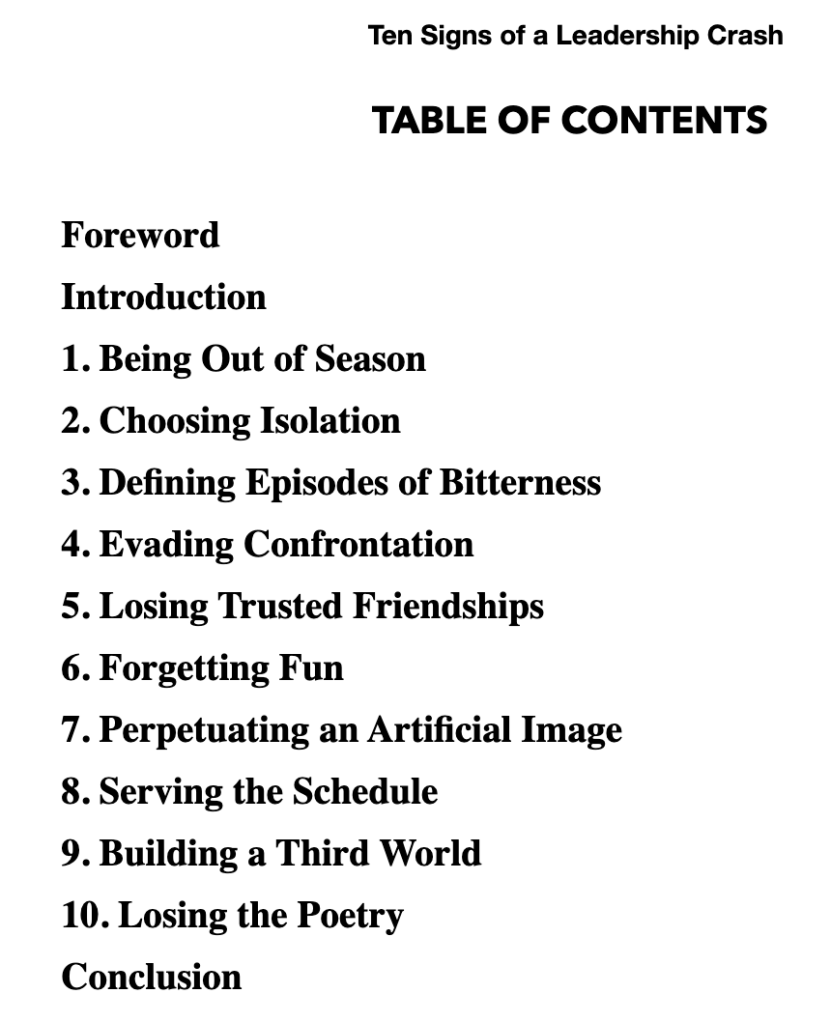
I read the title and then looked at the table of contents.  My first thought was . . . . “You almost don’t need to read the book because the chapter titles say it all!”

. . . . .

Yes, there is value in reading the book because the insights and framing of the explored principles will have a far greater impact as they are explained and fleshed out.

As I perused the chapter headings, I was reminded of examples of most of the titles and these pastoral tendencies that you have to fight, AND you have to win in the pastoral ministry.

I thought,” Which one of those 10 have you seen take place most often?”  “Which one is the most prevalent, and even the most obvious to anyone watching from the outside?”

My selection was #5 — Losing Trusted Friendships!  I have seen people throw others overboard, with seeming little grasp of how important that person has been in ministry over years and years of friendship, ministry, and shared counsel.  The indifference has been astonishing at times, but it is real, all too real when it happens.  And it happens!  And it happens because we all fail to fight that tendency that we are right and they are wrong . . . .

Every way of a man is right in his own eyes
but the LORD pondereth the hearts.

Yes, it is present on both sides.

However, the difference is that some individuals, on this-or-that side of the contrasting perceptions, are more self-aware of themselves, their thinking, actions, and/or their motivations.

THEREFORE! . . . Therefore, they are far less willing to throw over the relationship, and they fight to maintain it, and more often than not, they lose that fight — but only because the other side lacks that self-awareness — and therefore exhibits no fight to maintain that trusted friendship.  

The difference is that some fight for the relationship — whether in marriage, family, the church fellowship, or as a ministry leader, or as pastor of a local church.  In contrast, others find it easy to throw long and trusted friendships overboard.

To those “Relationship Fighters” —  Thank You for the fight, even though you will find that choice lonely and even though you will probably lose that fight,–  but not because you didn’t try and try, and try again.

“Thank You” for the fight” to maintain and keep that relationship —  in your marriage, in the family, with your siblings, with your parents, in those close friendships, with your fellow believers, with those fellow-laborers, and with leaders and/or pastors.”  You only really “lose” if you never try, and try, and try again, because when YOU no longer try,  you lose a little of who you are and want to be.


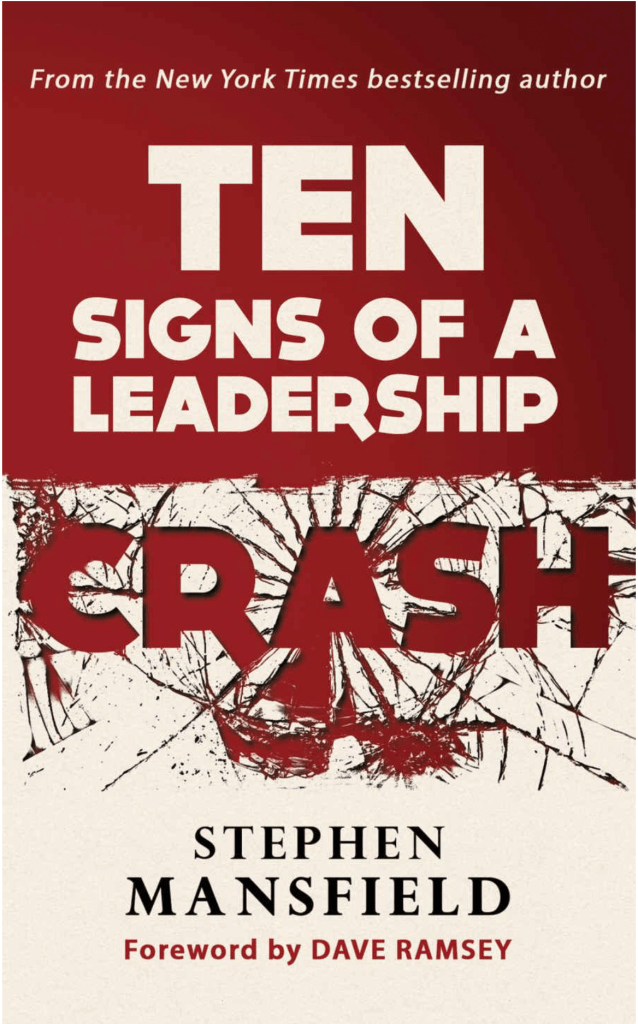
“For years, I had been taking notes on what those around a crashed leader would point out as the “signposts” on the road to the crash. It was fascinating. I don’t mean this callously. It was fascinating because in almost every case, people around a leader who crashed saw important signs very early on and simply did not act. What is important for the moment is not that they didn’t act. It is the fact that they saw trouble coming, even if they didn’t know what to do when they saw it. The point is there were signs. People saw them. Things might have turned out differently.

I began to compile what people had told me and what I had seen for myself about the signs that signaled a crash. I compared notes with consultants who handle these types of high-visibility crashes. We all saw that while we might have been using different language, we had become aware of the same signs of a personal decline.

I realized that while I will always help fix crashes—it is important work, particularly in our time when moral failures among leaders do so much damage—I could help even more by teaching what I had learned about the signs of an oncoming crash. I started calling this “lessons from the leadership crash post-mortem.”

In other words, if I could show people what to watch for in their friends, family, and associates that warned of a crash, I could do far more good than by repairing institutions and lives after the explosion. I could give corporate cultures and leadership teams of every kind—even husbands and wives—language to use for what they saw but couldn’t describe. I knew this could help stave off expensive, humiliating, life-ruining crashes.

This is exactly what I’m doing in this little book. I am going to describe the Ten Signs of a Leadership Crash. I’m going to list the lessons of the leadership crash post-mortem. I’m going to explain the ten very common behaviors that are almost always evident in the downward journey of a leader. Not all of these are involved in every crash story perhaps, but most of them are, and knowing just a few of them could save the millions of dollars, years of humiliation, hundreds and sometimes thousands of jobs, and much lost good that might have been done.

What if someone had stopped Bernie Madoff? What if a friend knew what to watch for in Tiger Woods? What if someone had courageously confronted Bill Clinton before that first time? What if friends and family had known what to watch for in Bill Cosby’s life, or Lance Armstrong’s, or Richard Nixon’s, or Jim Bakker’s, or Brett Favre’s, or the pastor of that 3000-member church in Detroit, or the CEO of Stanford Financial? What might Penn State have been spared by some courage and ethics once the signs appeared?

We can always fix things after the crash. My team and I are good at this. So are many others. Far better is to recognize the signs of a looming crash and intervene. This can save billions of dollars from lost production, the costs of repair and, even more, what is often lost to human lives.” — Stephen Mansfield

5 “Mistakes” That May Radically Change The Direction Of Your Pastoral Ministry

. . . . . 

After years of operating a Christian School for 36 years, I often remember taking the time to say to the faculty that there are certain things you can never do when it comes to teaching. They will devastate a situation and significantly impact the direction of your professional life.  Let me highlight two of them . . . .

. . . . . 

. . . . . 

Supervision: The top one might be failing to ensure the personal safety of the children.  If a child is injured or hurt and you were not present and/or proactively taking steps to prevent that injury, you may find the situation irrecoverable.  That was especially true when it came to any injury to the head, face, or eyes.  Those types of injuries have long-lasting personal consequences for a child.  If a child is seriously injured or even worse, you may not be able to overcome the enduring memories of that event!

Comments: Certain words should never come out of your mouth in speaking to a student or a parent.  One is, “I don’t have time to . . . .”  That parent has enrolled their child, their most precious possession, for you to have the time.  In fact, they are paying a good $ because they are expecting you to take and spend the time.  Another word is “stupid.”  Never use the word “stupid!”  You can make comments that are indefensible and severely hinder recovery with a parent — and even the child.

. . . . . 

Likewise, there are “mistakes” that a pastor can make which will devastate and significantly impact the direction of your professional life as a ministry leader or pastor.

#1) Lying: We all understand that there are different ways to lie or deceive.  Lying is the telling of an outright untruth.  “Deceiving” comes packaged in many different wrappings — not saying what we know is being asked, using nuanced words and /or parsing statements to mislead, making statements that are true as far as they go, but not answering by telling the whole truth, etc.

What a ministry leader or pastor cannot do is “outright lie.”  I am not sure that it is recoverable.  One may have to move on to another ministry after being caught in a lie.

While sometimes there is an argument to be made for misdirecting-deflecting, partially answering, or making misleading comments (i.e., “I wasn’t going to answer that question directly because I don’t and didn’t have the permission to do that.”), lying destroys all credibility.

That is not to say that giving answers (and particularly to cover your own actions) that do not reflect what actually took place is not and will not be rightly viewed a lying!  Any attempt to cover up what actually took place with nuanced, parsed, or weasel words will probably equally destroy one’s credibility!

The direction of the ministry changes, and you are now geographically the pastor of a different church, or positionally the leader, without credibility and impact in that church.

. . . . . 

#2) Financial Impropriety: The misuse of ministry monies, church credit cards, allotted monies in a pastoral expense account, or any hiding of important financial details will inflict some serious damage.  Mistakes are made, but not discernable or repeated mistakes.  I say “discernable” because there is no plausible explanation for those kinds of mistakes.  Plausibly, they had to be known when engaged in by the person.

Even the spending of money on this-or-that is rightfully the concern of the ministry.  A ministry leader or pastor cannot preach and teach the truths of Scripture, including the obvious truth that “this world is not our home, we’re just a passin’ through,” and then financially behave in ways that obviously shout that maybe it is.

The direction of the ministry changes, and you are now geographically the pastor of a different church, or a pastor with little ability to persuade or move others to live for the Lord.

. . . . . 

#3) Covering Up Wrong-doing: We have all heard the statement, “The coverup was worse than the crime.”  Any attempt to cover up wrong or manipulate a situation or an outcome will be seen as duplicity.  Any realized game playing never ends well.

I might suggest that even when it comes to the wrong-doing of others on the staff or part of the membership, attempting to cover the awareness of, or manipulate the damaging consequences of another’s actions, there will be significant damage to one’s credibility.

The direction of the ministry changes, and you are now geographically the pastor of a different church, or a pastor with little moral authority that is needed for a preaching ministry that challenges and changes lives.

. . . . . 

#4) Moral-Sexual Impropriety:  Untoward, indecent, or unseemly behavior involving those of the opposite sex is irrecoverable — or should be.  I say “should be” because today, that is seemingly no longer the situation, even among those who claim to be the most biblically-based ministries.

Even when it comes to the misconduct of others within the church body, ministry leaders and pastors are often walking on dangerously divert roads to not do what so obviously ought to be done.  Because it is so obvious, the ministry leader or pastor finds himself as discredited as the perpetrator.  Far too often, the account follows the same storyline — sexual wrong-doing, pastor acts as if he has a better read of the situation, pastors vouch for the person’s innocence, leaders decide that they have other and better solutions, everyone is pulled into the quagmire of the damaged and shamed.

Deal with sexual impropriety swiftly, cautiously, and clearly.  “Swift & cautious”?  Yes, start with something like the suspension of the individual as you investigate.  As you proceed, make clear and prompt changes to that status as the facts unravel.

The direction of the ministry changes, and you are now geographically the pastor of a different church, or a pastor who is unknowingly a figurehead, or no longer a pastor at all.

. . . . . 

#5) The Mishandling Of People: Ministry is about people, about relationships. The two elements that make a church a church are preaching & people, the pulpit and the pew, edification and fellowship.  Some of the greatest damage happens when ministry leaders and pastors mishandle and man-handle people!  Without examining all the ways that happens (indifference, insensitive comments, harsh responses, display of favoritism, dismissive, unconcerned, scrapped, et al.), the experience is real to those who encounter it.  In fact, the experience is, more often than not, consequential! #5) The Mishandling Of People: Ministry is about people, about relationships.

√ There is a reason that pastors move on, from ministry to ministry, after only a few years.  One of the reasons is that they have so damaged their relationships that they realize that they no longer have an impact on God’s people and/or the direction of that ministry.

√ There is a reason that pastors see the church turnover in membership, yearly attendance widely fluctuates, long-time members leave, and/or churches slowly decline over those years.  Pastors have explained away their failure in the hard work of “the people business.”

 “The ministry is great,
if it just wasn’t for the people,
and I am working on that!”

Over time, ministry leaders and pastors can slowly believe that the ministry is about them.  Understandably, they are so much the focus of ministry, “they begin to believe their own press.”  They are vital, and if this-or-that member or friend of the ministry leaves, even if they have been serving and giving for decades, that is not material or noteworthy.

The direction of the ministry changes, and you are now geographically the pastor of a different church, or the pastor of a much different church in makeup, effectiveness, and/or size.

The #1 Way To Blow Up A Ministry!

How to Blow Up a Church! - Ignite Christian ChurchIn a recent article, Dr. David Gunn, president of Regular Baptist Press, stated . . .
“This [congregational church government] can be messy sometimes, but as Jeff Straub cogently argues, it is the New Testament pattern. And one of the many benefits of responsibly implementing congregational church polity is that it mitigates the cultivation of corruption and heavy-handed leadership practices among officers of the church. When power is shared, it becomes much more difficult for a single person or small group of people to abuse that power toward unsanctified ends. And that, in turn, tends to decrease the chances of ministry collapse.” [1]

Pastors, deacons, ministry leaders, and staff need to . . . .

√ Go ‘Over-board’ To Be ‘Above-board’

√  Above-Board Is Why “The Church”

♦♦♦♦♦ ♦♦♦♦♦ ♦♦♦♦♦ ♦♦♦♦♦ ♦♦♦♦♦

If you want to observe a ministry or local church lose employees, membership, workers, volunteers, faculty . . .

Be Less Than Above-Board!

If you want to develop a reputation as an unhealthy ministry or institution, college, or local church . . . .

Be Less Than Above-Board!

If you want to create, aggravate, and/or perpetuate discord in a ministry or local church setting . . . .

Be Less, Far Less Than Above-Board!

♦♦♦♦♦ ♦♦♦♦♦ ♦♦♦♦♦ ♦♦♦♦♦ ♦♦♦♦♦

√  Above-Board Endorses & Appreciates Light:

Being genuinely “Above-Board” requires humility.  It requires a level of humility as well as a reasonable degree of self-awareness that realizes that. . . .

  • not all we say and do
  • not all we say about what we say and do, nor
  • not all the why of what we say and do is why we say and do,

. . . . reflects the reality of the situation!

rightowneyes

That is why “Transparency” is so vital to ministry and local church decisions and action.

Transparency involves . . . .

  • an open airing of the details — what was said and done
  • bringing in others from outside of the situation
  • an objective evaluation and evaluators
  • an opportunity and place for questions and answers
  • feedback from those who do not have a dog in the fight
  • an opportunity to explain, support, and/or clarify
  • “the church”

. . . . Because too often we do not have “the truth, the whole truth, and nothing but the truth.”  We may have “our truth,” or our sincerely believed perceptions, which may or may not reflect the reality of a situation!  We may even have deceived ourselfs and subconsciously know that we fudged on the facts! [2]

Because all of us are not suspicious enough of our thinking, our perceptions, our recall, and our accounting of the details and facts, that there must be a willingness to examine our own hearts, thinking, motives, words, and compulsions to avoid self-deception, and thereby the deceiving of others,

That is exactly why genuine congregational church government promotes an honest level of transparency.

That is why, when dealing with sinful behavior, the Scriptures say . . . . “tell it to the church . . . . neglect to hear the church.”

Because both sides involved in a disagreement may see and recall the details and facts differently.  “The church” is brought into it to discern, as best as they are able as a diverse body of fellow believers, as to what is the actual “truth” of the matter.

Because “the church” is composed of individuals who are not party to the offense.  In fact, how twisted the thinking that would argue that those who are party to a dispute can adjudicate it.   The fact that “the church” is a “disinterested party” to the issue gives the church body legitimacy.

Because “the church” is composed of a wide variety of individuals — with varied experiences, with different thinking, with a variety of temperaments, friends with and not, related and unrelated to, older and younger, male and female, sympathetic and detached, etc.

Because when “the church” comes to agreement — to act or not to act accordingly —  it gives legitimacy to the fairness and equity of the process.  An individual’s decision or a “select group” only leaves the church in the dark about that decision.  “The church” fellowship as a whole is called upon to hear, arrive at, and support a corporate-body decision.

Because when “the church” hears the details and “facts,” misinformation, rumors, and gossip is quelled.  “The church” fellowship understands, as fully as they can, as to what has actually taken place, versus what is said to have taken place.

“ABOVE BOARD”

. . . . ought to be the words that mark deliberation, decisions, actions, procedures, church discipline, policy changes, discussion, committee considerations, voting, constitutional changes, discussions, analysis, examination, et al.

♦♦♦♦♦

Pastors, deacons, ministry leaders, and staff need to . . . .

√ Go ‘Over-board’ To Be ‘Above-board’

√  Above-Board Is Why “The Church”

♦♦♦♦♦

The #1 Way
To Blow Up A Ministry . . .
Play Games!
[3]

♦♦♦♦♦

Trust
“the church”
to make good and godly decisions
when they have the right information,
when they hear and know the facts!


Other Information & Links:

1. David Gunn: https://baptistbulletin.org/the-baptist-bulletin-magazine/preventing-ministry-collapse/

2. Psalm 15:2 — “He that walketh uprightly, and worketh righteousness, and speaketh the truth in his heart.”

3. Part of that “game-playing” is nuanced words and answers, and/or parsing words, to give the impression that what is being said reflects what actually happened!